
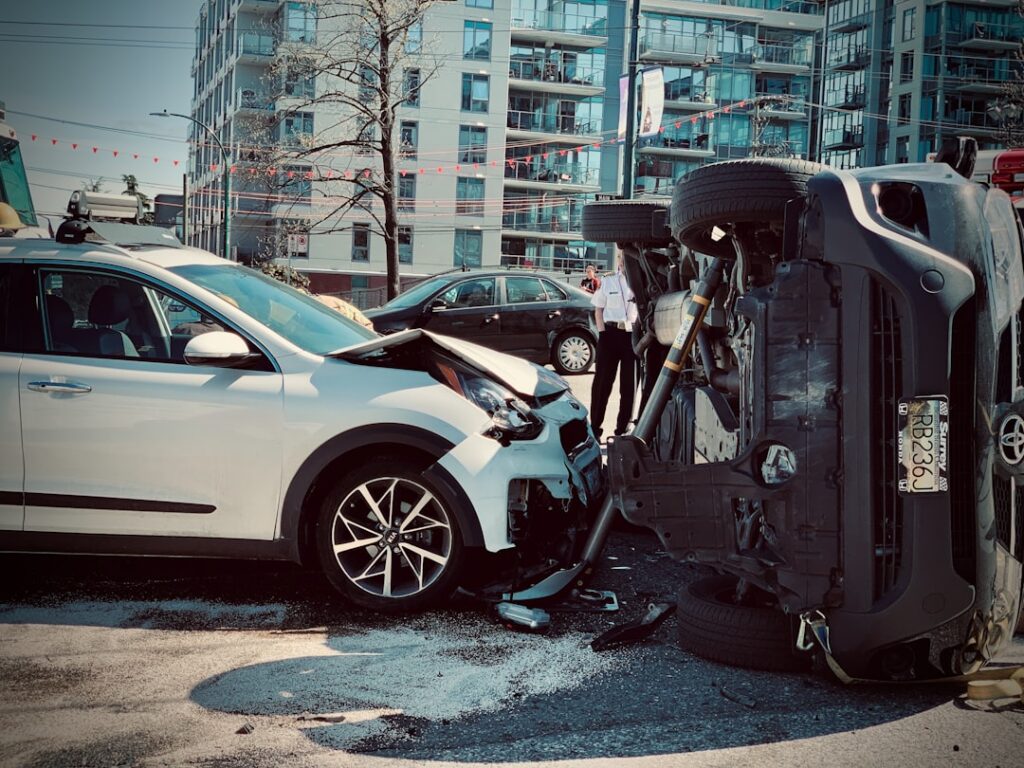
5 Ways to Recover Compensation When Hit by an Uninsured Driver in New Jersey
Even if the at-fault driver in your New Jersey accident is uninsured, you have at least 5 paths to recover compensation. The first is your own auto policy’s UM/UIM (Uninsured/Underinsured Motorist coverage), followed by a resident family member’s policy, PIP no-fault benefits, third-party policies if you were a pedestrian or passenger, and finally a direct civil suit against the at-fault driver’s personal assets. How these options are combined determines your total recovery — speak with an attorney as soon as possible.
- Why Uninsured Driver Accidents Are Common in New Jersey
- Method 1 — Use Your Own Auto Policy’s UM/UIM (Top Priority)
- Method 2 — Use a Resident Family Member’s Auto Policy
- Method 3 — PIP (Personal Injury Protection) for Immediate Medical Bills
- Method 4 — Other Policies May Apply if You Were a Pedestrian or Passenger
- Method 5 — Direct Civil Suit Against the At-Fault Driver’s Assets
- 3 Things You Must Do on the Day of the Accident
- Frequently Asked Questions
1. Why Uninsured Driver Accidents Are Common in New Jersey
Although auto insurance is mandatory in New Jersey, state insurance department statistics indicate that approximately 14% of drivers are uninsured or carry coverage below adequate limits. In practical terms, roughly 1 in every 7 to 8 vehicles you encounter on the road may not provide full compensation if they cause a serious accident.
The good news: by properly leveraging your own policy and the protections built into NJ law, full recovery is achievable in most uninsured-driver cases. The key is identifying — quickly — which combination of coverages applies to your specific situation.
2. Method 1 — Use Your Own Auto Policy’s UM/UIM (Top Priority)
The first place to look is your own auto policy’s UM (Uninsured Motorist) and UIM (Underinsured Motorist) coverage. UM applies when the at-fault driver carries no insurance at all; UIM applies when they have insurance but the limits are insufficient to cover your damages.
| Coverage | When It Applies | NJ Minimum Required Limit |
|---|---|---|
| UM (Uninsured) | At-fault driver has no insurance | $15,000 per person / $30,000 per accident |
| UIM (Underinsured) | At-fault driver’s limits are inadequate | Matches your own BI limit |
| UM/UIM Property Damage | Damage to your vehicle/property | $5,000 (optional) |
3. Method 2 — Use a Resident Family Member’s Auto Policy
Even if you carry no insurance or low limits yourself, you can often recover under the auto policy of a spouse, parent, or child who lives in your household. NJ law extends coverage to “resident relatives” living at the same address.
- If you don’t drive or carry no auto policy → your parent’s or spouse’s UM coverage may apply
- When your child is in an accident → it can be processed under your family policy
- Caveat: proof of “residency” is critical (driver’s license address, mail, utility bills)
4. Method 3 — PIP (Personal Injury Protection) Covers Medical Bills Immediately
Because NJ is a “no-fault” state, your own auto policy’s PIP (Personal Injury Protection) pays medical expenses immediately regardless of who caused the accident. Whether the other driver is insured has no impact on PIP.
- Default PIP limit: $15,000 (NJ minimum)
- Available upgrades: $50,000 / $75,000 / $150,000 / $250,000
- Covered services: ER visits, hospitalization, surgery, rehabilitation, psychiatric care, and a portion of lost wages
PIP activates automatically without a separate claim — simply bring your auto insurance card to the hospital after the accident.
5. Method 4 — Other Policies May Apply if You Were a Pedestrian or Passenger
If you were walking or riding as a passenger in another person’s vehicle at the time of the accident, the pool of applicable coverage expands.
| Situation | Applicable Coverage |
|---|---|
| Struck by a vehicle as a pedestrian | Your own or family member’s UM + family PIP + NJPLIGA (state guaranty fund) |
| Passenger in another person’s vehicle | The host vehicle’s policy + your family policy (stacked) |
| Passenger in a taxi, Uber, or Lyft | The company’s commercial policy (up to $1.5M) |
6. Method 5 — Direct Civil Suit Against the At-Fault Driver’s Assets
If none of the four options above fully covers your damages, and the at-fault driver has identifiable assets (home, business, bank accounts), you can file a direct civil lawsuit against them personally.
However, most uninsured drivers have limited assets, so the practical recoverability must be assessed in advance. Song Law Firm conducts an Asset Investigation before accepting a case to evaluate the realistic chance of actual recovery.
7. 3 Things You Must Do on the Day of the Accident
- Get medical treatment and preserve your records — these are the foundation of any PIP claim
- File a police report and obtain confirmation of the at-fault driver’s insurance status — required for any UM claim
- Free consultation with an attorney (as soon as possible) — to determine the optimal combination of coverages
Frequently Asked Questions
Will filing a claim with my own insurer raise my premium?
Can I file a UM claim if the at-fault driver fled the scene (hit-and-run)?
Is there a statute of limitations for UM claims?
What if the at-fault driver is insured but with inadequate limits?
Can I consult with an attorney directly in Korean?
Uninsured Driver Accident — Free Consultation Available
The hours immediately after the accident determine the scope of your recovery. Korean-speaking attorneys are available to assist you directly.
This column is provided for general informational purposes only and does not constitute legal advice. Reading this column does not create an attorney-client relationship. Every personal injury case turns on its specific facts, the severity of injuries, applicable insurance limits, and other individual circumstances; references to past results or scenarios do not guarantee a similar outcome. Please consult directly with an attorney for legal advice specific to your situation.
This column constitutes attorney advertising by Song Law Firm (a law firm registered in New Jersey and New York) and complies with the NJ and NY Rules of Professional Conduct.
Song Law Firm | Parker Plaza, 400 Kelby St, 19th Floor, Fort Lee, NJ 07024 | 201-461-0031 | mail@songlawfirm.com

