
PERSONAL INJURY LAW · SONG LAW FIRM COLUMN
Situation
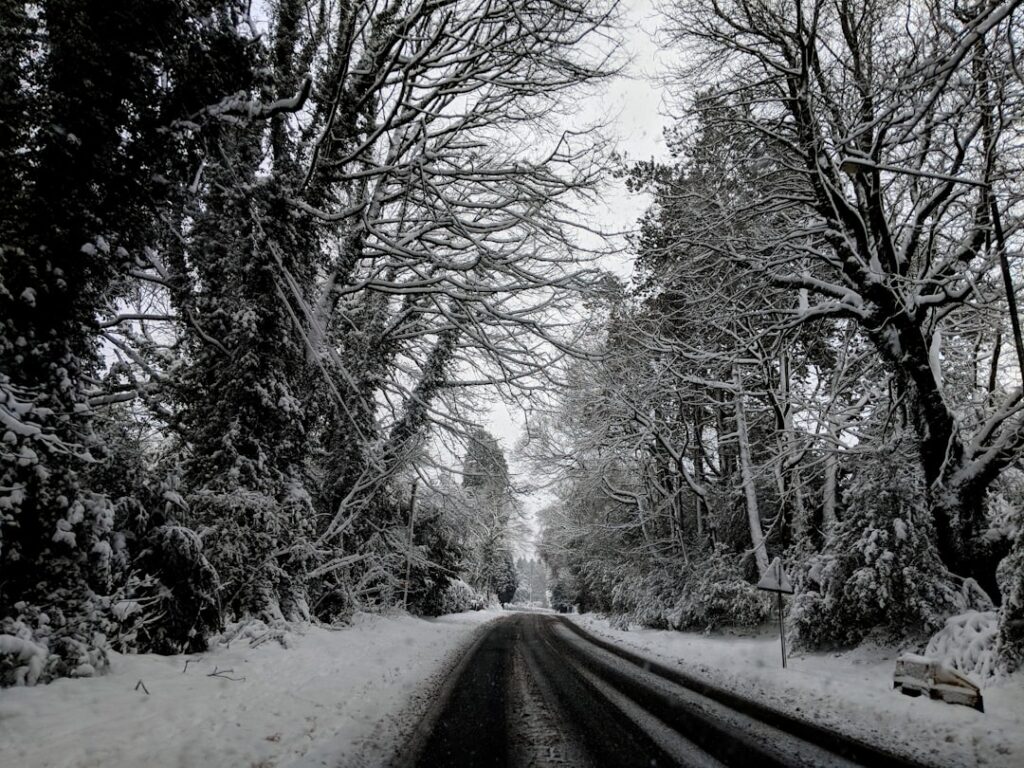
Between December and March, New Jersey and New York see a sharp rise in accidents caused by black ice, packed snow, and sleet — most often on bridges, overpasses, shaded curves, and early-morning commutes. Insurance carriers routinely frame these as "acts of nature" to avoid liability, but American case law holds every driver to a duty to reduce speed to conditions. When a driver ignores that duty, negligence is squarely on the table.
Legal Concept
N.J.S.A. 39:4-98 and NY VTL §1180 codify the same rule: even when driving under the posted limit, a motorist must slow down when snow, rain, fog, or ice compromises traction. Traveling at 30 mph in a 55 mph zone on a black-ice bridge can still be excessive and constitute negligence per se. Following too closely (N.J.S.A. 39:4-89) is evaluated far more strictly on icy surfaces.
NJ Rules
Road maintenance liability generally rests with the municipality or NJDOT. Under NJ Title 59 Tort Claims Act, a plaintiff must serve written notice of claim within 90 days of the incident and clear the "palpably unreasonable" maintenance threshold in N.J.S.A. 59:4-2. Icy sidewalks and parking lots invoke premises liability — commercial property owners and managers owe a duty of reasonable snow and ice removal within a reasonable time after each storm.
Practical Response
First, photograph the road surface, ambient temperature, and precipitation immediately — snow can melt within 24–48 hours, destroying the evidence. Second, photograph the opposing driver's tires: worn tread or summer-only tires in a winter storm are strong negligence indicators. Third, secure written witness statements while memories are fresh. Fourth, gather dashcam footage, nearby business CCTV, and traffic cameras before they auto-overwrite. Fifth, pull NOAA weather data to document precise precipitation and temperature at the crash time and location.
Common Misunderstandings
Many drivers assume "I slipped on ice, so it's not my fault." That is wrong. Duty to reduce speed and maintain safe following distance survives every weather event; the question is how well you observed those duties. Conversely, don't accept the opposing carrier's "the ice caused it, no one is liable" theory — juries hold drivers strictly to the reasonable-speed rule.
Key Takeaways
Winter accident recovery hinges on early evidence: preserve NOAA data, dashcam, CCTV, tire photos, and witness statements; assess municipal/NJDOT liability under Title 59 with the 90-day notice; and evaluate premises liability against property owners for icy sidewalks and lots.
FAQ
Q1. Can I still recover if the ice has melted?
Yes. NOAA weather records, nearby CCTV, and witness statements can reconstruct road conditions at the moment of the crash.
Q2. What is the deadline to sue a municipality?
Under the NJ Tort Claims Act, plaintiff must file a written notice of claim with the city or NJDOT within 90 days. Missing that deadline generally bars the claim.
Q3. Does driving without winter tires create liability?
Not directly by statute, but driving on summer tires during a forecasted ice event can support a negligence finding under the reasonable-speed and safe-operation duties.
Q4. What if I fell on ice in a parking lot?
That is a premises liability claim against the property owner and property manager. Failure to remove snow and ice within a reasonable time frequently supports meaningful compensation.
SONG LAW FIRM
Need advice on an auto accident or personal injury matter?
📞 201.461.0031 · ✉ mail@songlawfirm.com · 🌐 songlawfirm.com
📍 Parker Plaza, 400 Kelby Street, Suite 1900, Fort Lee, NJ 07024
