
PERSONAL INJURY LAW · SONG LAW FIRM COLUMN
Situation
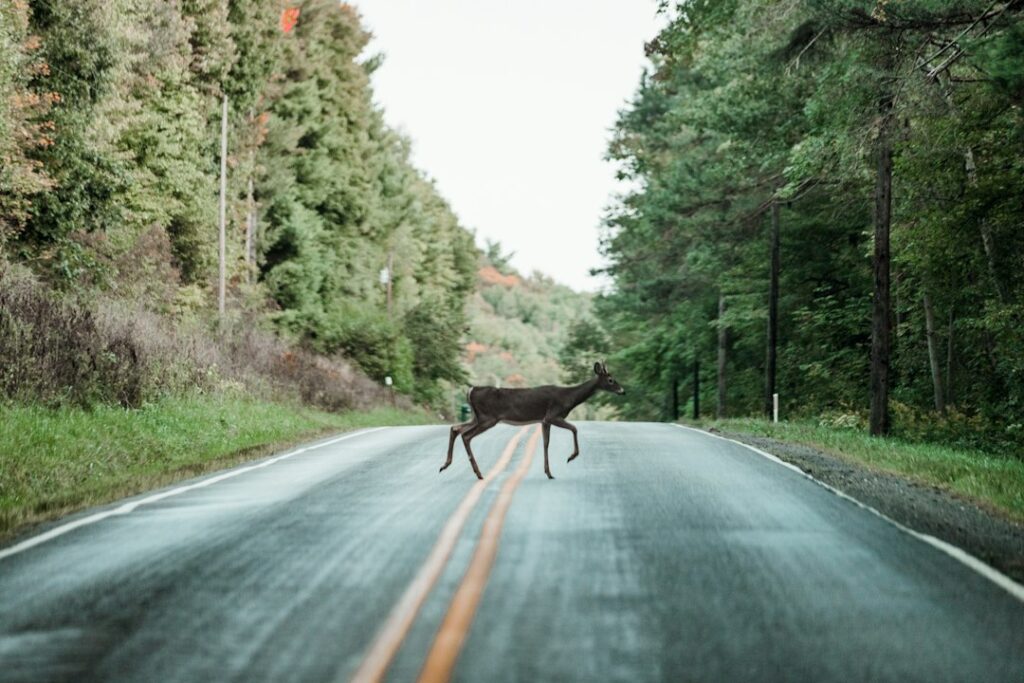
New Jersey has a substantial deer population, and collisions concentrate during the autumn rut (October through December) at dawn and dusk on rural stretches of Route 78, 287, and 206 in Hunterdon, Warren, Sussex, Morris, and Somerset Counties. Drivers who swerve to avoid a deer frequently trigger secondary collisions with the center line, guardrails, or the vehicle ahead. Deer strikes follow entirely different insurance rules than typical crashes, and understanding the coverage map matters.
Legal Concept
Under New Jersey auto insurance practice, directly striking an animal is a Comprehensive-coverage claim, not Collision. If the driver swerves and then hits another vehicle, guardrail, or tree, the resulting damage is a Collision claim. Bodily-injury treatment is still handled first by the driver's or household's PIP under N.J.S.A. 39:6A-4, so medical costs are covered even when no other motorist is involved.
NJ Rules
A direct deer strike is typically treated as an unavoidable accident, and driver fault is difficult to assign. In secondary collisions injuring other motorists, pedestrians, or property, however, the Reasonable Driver Standard applies: excessive speed, failure to adjust for fog, or an abrupt steering input can expose the driver to liability. Comprehensive claims are subject to the policyholder's deductible, and premium impact varies by carrier.
Practical Response
Activate hazards, move to the shoulder if safe, and call 911 to obtain a Police Report. Photograph the deer carcass, roadway marks, and vehicle damage from multiple angles. All occupants should be medically evaluated at an emergency room, with a follow-up visit within forty-eight hours — whiplash and thoracic bruising often emerge after a delay even in a low-speed strike. Report the claim to the carrier immediately and, if desired, log the carcass with the New Jersey Division of Fish & Wildlife or DEP 24-hour hotline.
Common Misunderstandings
Skipping the claim to avoid premium increases often costs more than it saves. Most New Jersey carriers treat Comprehensive claims as not-at-fault with limited or no surcharge, and unreported incidents jeopardize timely PIP coverage. The notion that "no other driver means no recovery" also misleads: PIP, Comprehensive, Collision, and Rental coverages combine to pay medical bills, vehicle repair, and loss-of-use.
Key Takeaways
An NJ deer strike requires accurate mapping of Comprehensive, Collision, and PIP coverage. In secondary collisions, driver fault remains in play — speed, lookout, and emergency maneuvers matter. Immediate photos, Police Report, and prompt medical evaluation are indispensable. Watch both the PIP claim timing requirements and the two-year personal-injury statute of limitations. In autumn and early winter, Deer Crossing zones warrant high beams and reduced speed.
FAQ
Q. Will reporting a deer strike raise my premium? A. Most carriers treat it as not-at-fault with little or no surcharge; failing to report risks delayed PIP coverage. Q. How are my injuries treated without another driver? A. Your or a household member's PIP pays medical bills first. Q. I swerved and hit a guardrail. A. That is a Collision claim, and if another vehicle was involved driver fault is evaluated.
SONG LAW FIRM
Need advice on an auto accident or personal injury matter?
📞 201.461.0031 · ✉ mail@songlawfirm.com · 🌐 songlawfirm.com
📍 Parker Plaza, 400 Kelby Street, Suite 1900, Fort Lee, NJ 07024
