
PERSONAL INJURY LAW · SONG LAW FIRM COLUMN
Situation
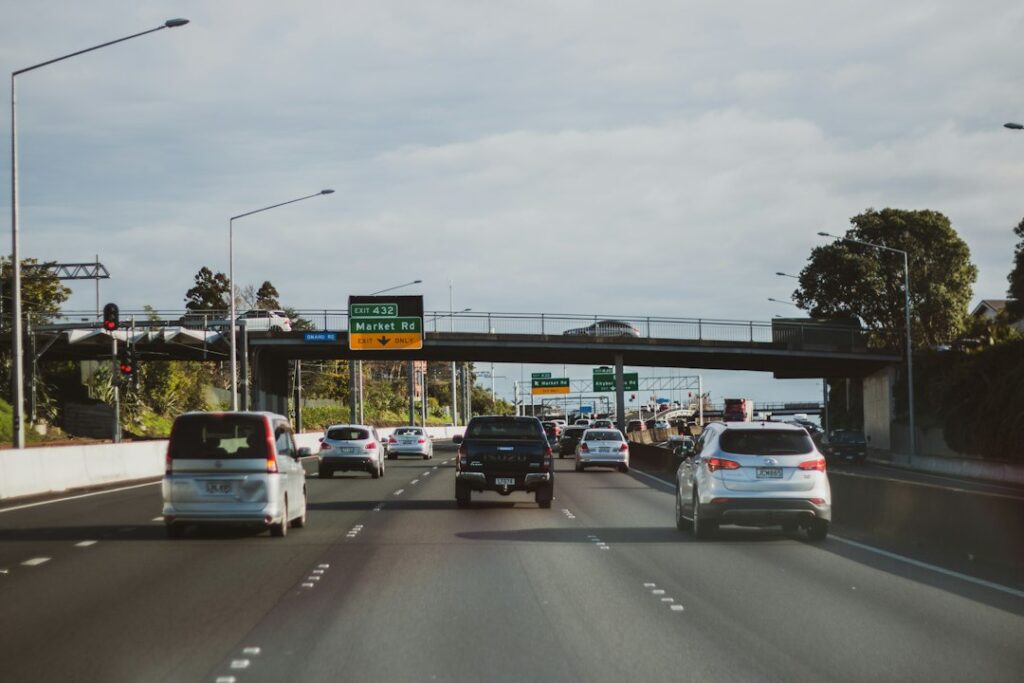
Toll plazas on the New Jersey Turnpike and the Garden State Parkway pack a great deal of risk into a few hundred feet of road. Drivers slow down, speed up, and change lanes to reach an E-ZPass lane or a cash lane, all while reading overhead signs that appear quickly. In sections where tolls are collected electronically by overhead gantries, most traffic barely slows at all, while a driver who is unfamiliar with the road may brake unexpectedly because he or she thinks a stop is required.
The result is a familiar set of crashes: rear-end collisions on the plaza approach, sideswipes while drivers weave between lanes, and chain reactions involving three or more vehicles on the merge back into highway traffic. These cases often look simple at first — "the car in back is always at fault" — but toll plaza collisions frequently involve shared fault, several insurance companies, and evidence that disappears quickly. This column explains how New Jersey law approaches these crashes and what you can do to protect a claim.
Legal Concept
Most toll plaza claims are negligence claims. The injured person must show that another driver failed to use reasonable care under the circumstances and that this failure caused the injury. Two New Jersey traffic statutes frequently frame that analysis.
First, N.J.S.A. 39:4-89 prohibits following another vehicle more closely than is reasonable and prudent, having due regard to speed, traffic, and the condition of the road. At a plaza approach, where traffic ahead can slow without much warning, a driver who leaves too little space will usually have a hard time explaining a rear-end collision.
Second, N.J.S.A. 39:4-88 requires drivers on roads divided into lanes to stay as nearly as practicable within a single lane and not to move out of that lane until they have first made sure the movement can be made safely. A driver who cuts across several lanes at the last second to reach an E-ZPass lane, or who swerves out of a cash lane into the side of another car, may be the primary cause of the crash even if a different vehicle made the actual contact.
A statutory violation does not automatically decide civil liability, but it is strong evidence of negligence.
NJ Rules
New Jersey follows modified comparative negligence under N.J.S.A. 2A:15-5.1. An injured person can recover as long as his or her share of fault is not greater than the fault of the defendants, and the award is reduced by that percentage. In a toll plaza crash, the other driver's insurer may argue that you stopped too abruptly, were distracted while looking for the right lane, or changed lanes yourself. Careful documentation of what actually happened matters.
Medical bills after a New Jersey auto accident are paid first through your own Personal Injury Protection (PIP) coverage, regardless of who caused the crash. A claim for pain and suffering against the at-fault driver depends on the lawsuit option you selected on your own policy. If you have the limitation-on-lawsuit option, often called the verbal threshold, under N.J.S.A. 39:6A-8(a), you must show an injury that fits one of the statutory categories — for example, a permanent injury supported by objective medical evidence, or a displaced fracture.
Deadlines also matter. In New Jersey, a personal injury lawsuit generally must be filed within two years of the accident (N.J.S.A. 2A:14-2). If the crash happened in New York, the general period for negligence claims is three years (CPLR 214(5)). And if a public entity may have contributed to the crash — through a dangerous roadway design, confusing signage, or a maintenance problem — the New Jersey Tort Claims Act requires a notice of claim within 90 days of the accident (N.J.S.A. 59:8-8). Claims against public entities face additional legal hurdles, so that possibility should be evaluated early, not after the window has closed.
Practical Response
- Call the police and ask for a crash report. Make sure every driver's name, plate, and insurance company are recorded.
- If it is safe, photograph the vehicles before they are moved, along with lane markings, overhead signs, and the lane each car was in.
- Save your dashcam footage right away. Many dashcams record in a loop and overwrite older files.
- Write down the exact time. E-ZPass transaction records carry timestamps that can help reconstruct where and when your vehicle passed a toll point.
- Ask an attorney to send a preservation request for toll authority camera footage promptly. Video from plazas and gantries is not kept indefinitely, and once it is overwritten it cannot be recovered.
- Get the names and phone numbers of witnesses, especially drivers in neighboring lanes.
- See a doctor promptly and notify your own insurer so PIP benefits can begin.
Multi-Car Chain Collisions
Chain-reaction crashes near a plaza raise a distinctive question: which driver caused which impact? The first car may be struck by the second car, which was pushed forward by the third. Damage patterns, the number of impacts each occupant felt, and repair estimates showing both front and rear damage all help sort out responsibility. Your claim may involve two or more liability carriers at once.
Common Misunderstandings
- "The rear driver is always 100% at fault." Rear-end crashes usually point to the following driver, but a sudden, unnecessary stop or lane change in front of that driver can shift part of the fault.
- "If I was rear-ended, my own policy doesn't matter." Your PIP pays your medical bills first, and your lawsuit option determines what non-economic damages you can pursue.
- "The toll authority keeps every video." Recordings can be overwritten; a prompt request is what keeps them available.
- "A slow plaza bump can't cause a real injury." Low-speed rear impacts can still cause neck and back injuries whose symptoms appear days later.
Key Takeaways
Liability usually turns on following distance and lane-change rules, and New Jersey's comparative fault system means your assigned percentage directly affects your recovery. Preserve dashcam footage, E-ZPass records, and plaza video early, get medical care, and keep track of the two-year New Jersey filing deadline — and the 90-day notice rule if a public entity may be involved.
FAQ
Q. I stopped suddenly because I realized I was in the wrong lane. Can I still recover if someone hit me from behind?
A. Possibly. The following driver still had a duty to keep a safe distance, but your sudden stop may be considered when fault is divided.
Q. Does it matter whether the crash happened in New York instead of New Jersey?
A. Yes. Filing deadlines, injury thresholds, and procedures differ between the two states, so the crash location should be identified at the very start.
If you were hurt in a toll plaza crash, Song Law Firm can review the facts and explain your options under New Jersey and New York law.
SONG LAW FIRM
Need advice on an auto accident or personal injury matter?
📞 201.461.0031 · ✉ mail@songlawfirm.com · 🌐 songlawfirm.com
📍 Parker Plaza, 400 Kelby Street, Suite 1900, Fort Lee, NJ 07024
