
PERSONAL INJURY LAW · SONG LAW FIRM COLUMN
Situation
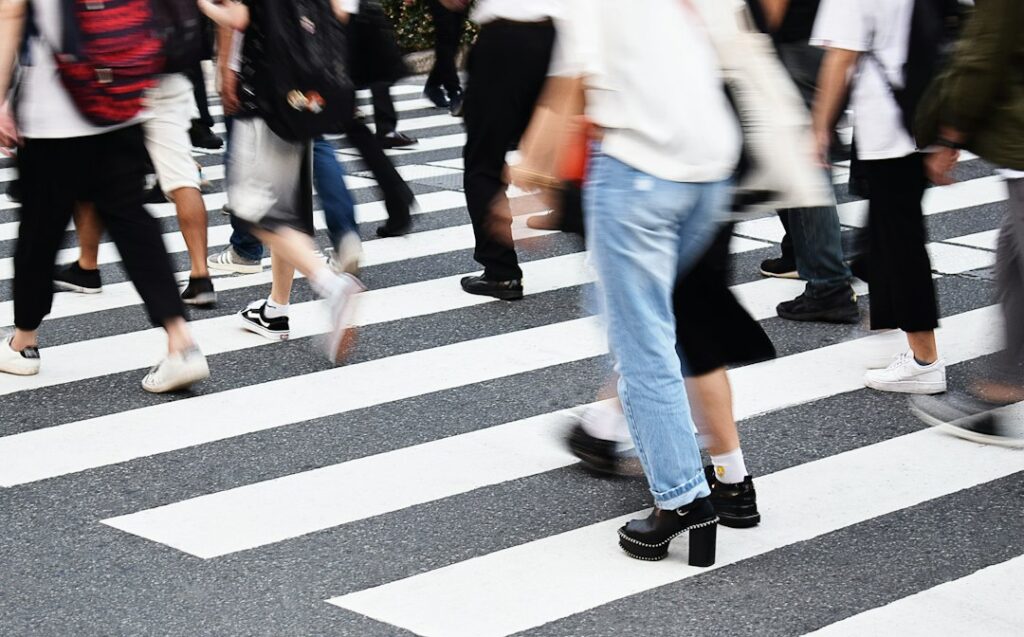
Pedestrian accidents at crosswalks happen regularly in dense commercial corridors like Fort Lee, Palisades Park, and Edgewater, NJ. Victims often sustain serious injuries, and the at-fault driver's auto insurance alone rarely covers all medical bills, lost wages, and pain-and-suffering damages. Even pedestrians who do not own a car can access New Jersey No-Fault PIP benefits through the at-fault vehicle to begin treatment immediately, provided they understand the eligibility rules and documentation standards.
Legal Concept
New Jersey is a No-Fault state, meaning each party's PIP coverage pays medical bills first regardless of fault. For a pedestrian without household auto insurance, N.J.S.A. 39:6A-4.5 directs the striking vehicle's PIP to pay the medical expenses. Liability becomes central when the pedestrian pursues non-economic damages such as pain and suffering, which require meeting the verbal threshold (permanent injury) if the injured party selected the Limitation on Lawsuit option on their own policy.
NJ Rules
Under N.J.S.A. 39:4-36, drivers must yield to and, where applicable, stop for pedestrians within marked crosswalks. Unmarked crosswalks at intersection corners carry the same yielding duty. Violation of this statute creates a strong presumption of driver negligence. Comparative negligence under N.J.S.A. 2A:15-5.1 reduces recovery proportionally if the pedestrian is partly at fault; a pedestrian found more than 50 percent at fault recovers nothing.
Practical Response
Move to safety and call 911 immediately so an official Police Report documents the scene. Preserve crosswalk photos, nearby surveillance footage from stores and traffic signals, and witness contact information as quickly as possible. Start PIP-covered treatment promptly and keep organized records of diagnoses, physical therapy sessions, and imaging. Early emergency room visits and treatment within sixty days of the collision strengthen both PIP eligibility and later liability claims.
Common Misunderstandings
Many injured pedestrians wrongly assume that without personal auto insurance there is no path to medical coverage. In reality the striking vehicle's PIP, or the Property Liability Insurance Guaranty Fund when the driver is uninsured, often provides the coverage. Pedestrians also mistakenly conclude that stepping outside the painted lines means total fault. Factors such as unmarked intersection corners, driver speeding, and failure to maintain lookout can shift the comparative-negligence analysis substantially.
Key Takeaways
Crosswalk pedestrian cases in New Jersey blend PIP medical coverage, driver liability, and UM/UIM considerations. Treatment access does not depend on the pedestrian owning a car, and liability recovery remains available even in unmarked crossing scenarios when driver fault is proven. The two-year statute of limitations, verbal-threshold evaluation, and comparative-negligence framework make early counsel essential.
FAQ
Q. I have no auto insurance of my own — can I still get medical coverage? A. Yes. Under New Jersey No-Fault law, the striking vehicle's PIP typically pays. Q. I was crossing outside the marked lines. Am I automatically at fault? A. Not necessarily. Comparative negligence weighs driver speeding, lookout failure, and intersection geometry too. Q. How quickly should I act? A. Call 911 at the scene, seek emergency care the same day, and begin consistent documented treatment within sixty days.
SONG LAW FIRM
Need advice on an auto accident or personal injury matter?
📞 201.461.0031 · ✉ mail@songlawfirm.com · 🌐 songlawfirm.com
📍 Parker Plaza, 400 Kelby Street, Suite 1900, Fort Lee, NJ 07024
