
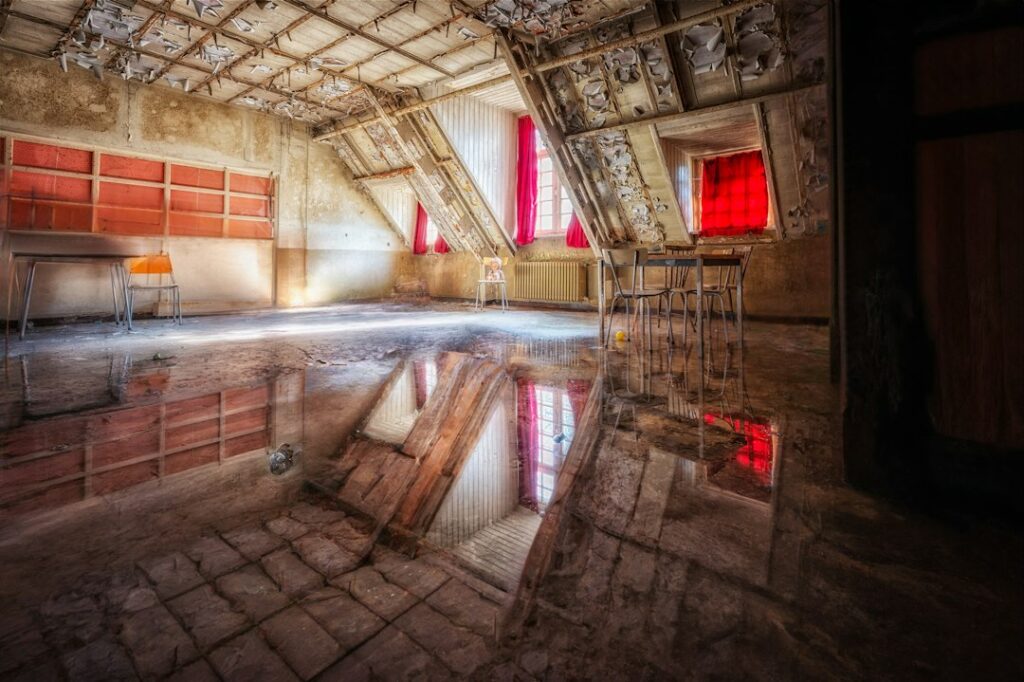
Case Study: Water-Damage Claim Denied — NJ Coverage Action and Bad Faith Claim Secure Payment
The Situation
The client owned a small retail business in New Jersey and had done what responsible business owners are supposed to do: purchased a commercial property insurance policy to protect the store against unexpected losses. That protection was put to the test when a pipe in the store failed suddenly. Water flooded the retail space, destroying inventory and damaging the fixtures the business depended on to operate. What should have been a straightforward claim under a commercial property policy instead became the beginning of a prolonged dispute with the client’s own insurer.
The insurer denied the claim. In its denial, it relied on a policy exclusion for “wear and tear” and “continuous seepage,” taking the position that the water damage resulted from a long-term, gradual leak rather than a sudden event. Critically, the insurer reached that conclusion without having its adjuster inspect the failed pipe itself. The very component at the center of the dispute was never examined by the company that declined to pay for the damage it caused.
Meanwhile, the store remained closed for weeks. With no inventory to sell and damaged fixtures, the business was losing income every day it stayed shut. The client obtained a plumber’s report and submitted it to the insurer, hoping that a professional’s assessment of the failure would prompt the company to take a second look. The insurer refused to reconsider. Facing mounting losses and an insurer unwilling to move, the client turned to Song Law Firm.
The Legal Issues
The dispute raised two related questions. The first was coverage: did the policy cover this loss, or did the “wear and tear / continuous seepage” exclusion apply? In New Jersey, insurance policies are contracts, and courts generally give their language its plain and ordinary meaning. At the same time, New Jersey courts have long recognized that insurance policies are typically drafted by the insurer, not negotiated line by line with the policyholder. For that reason, exclusions are generally construed narrowly, the insurer bears the burden of showing an exclusion applies, and genuine ambiguities are generally resolved in a way that honors the reasonable expectations of the insured. A party facing a real controversy over its rights under a contract, including an insurance policy, may ask a New Jersey court to declare those rights.
The second question was whether the insurer’s handling of the claim crossed the line into bad faith. Under New Jersey law, an insurer that denies a first-party claim without a reasonable basis, where the claim is not “fairly debatable,” may face liability beyond the policy benefits themselves. The key inquiry is whether the insurer had a legitimate, reasonable basis for its denial at the time it made it. An insurer that denies a claim based on a factual conclusion it never investigated may have difficulty showing that the claim was genuinely debatable.
- Pickett v. Lloyd’s, 131 N.J. 457 (1993) — The New Jersey Supreme Court’s leading decision on first-party bad faith claims. It established that an insurer may be liable for bad faith when it denies benefits on a claim that is not “fairly debatable.”
- Zacarias v. Allstate Insurance Co., 168 N.J. 590 (2001) — A New Jersey Supreme Court decision addressing how insurance policies are interpreted, including the role of plain language and the circumstances in which an insured’s reasonable expectations come into play.
- N.J.S.A. 2A:16-50 et seq. (Declaratory Judgments Act) — The New Jersey statute that allows a court to declare the rights and obligations of parties under a written contract, such as an insurance policy, when a real dispute exists.
Song Law Firm’s Strategy
The insurer’s denial rested on a single factual premise: that the water damage came from long-term seepage rather than a sudden failure. Song Law Firm’s first step was to test that premise with qualified, independent evidence. The firm retained an independent plumbing expert to examine the failure. The expert’s report concluded that the damage resulted from a sudden fitting failure, not long-term seepage. This mattered for two reasons. It directly undercut the factual basis for applying the exclusion, and it highlighted the contrast between a careful technical analysis and an insurer’s conclusion reached without inspecting the pipe at all.
With that evidence in hand, the firm filed a declaratory judgment action under New Jersey’s Declaratory Judgments Act, asking the court to determine that the policy covered the loss. The coverage argument emphasized well-established principles of New Jersey insurance law: exclusions are construed narrowly, and ambiguities are read in favor of the insured’s reasonable expectations. A business owner who buys commercial property insurance reasonably expects protection against a sudden pipe failure that floods the store. A “wear and tear / continuous seepage” exclusion, read narrowly, should not be stretched to cover a sudden event that the evidence showed was not gradual deterioration.
Alongside the coverage claim, the firm pleaded a concurrent bad faith claim. Under the standard recognized in Pickett, the question was whether the insurer denied a claim that was not fairly debatable without a reasonable basis. The denial without any inspection of the failed pipe supported that claim. Pleading bad faith from the outset signaled that the case was not only about the policy benefits, but about how the insurer had reached its decision. As the case moved into discovery, the firm obtained the insurer’s claim file. That file confirmed that the failed pipe had never been inspected. Song Law Firm brought the claim file, together with the independent expert report, to mediation, using both documents to show the insurer the risks it faced if the case proceeded.
Outcome and Takeaways
At mediation, the insurer reversed its position. It agreed to pay the client’s property loss and business interruption loss, along with a contribution toward the client’s attorney’s fees. The terms of the resolution are confidential. For the client, the settlement meant recovering the losses from the damaged inventory and fixtures and the income lost while the store was closed, without the uncertainty of a trial.
For business owners and homeowners in New Jersey or New York facing a similar denial, a few practical points stand out:
- Do not accept the insurer’s explanation as the final word. A denial letter reflects the insurer’s position, not necessarily what the policy or the facts support.
- Evidence about the cause of loss matters. When a denial turns on how damage occurred, an independent expert’s analysis can be decisive.
- Ask how the insurer reached its decision. Whether the insurer actually investigated, such as inspecting the item that failed, can be central to a bad faith claim.
- Preserve documents and damaged materials. Keeping the failed component, reports, photographs, and correspondence helps protect your ability to challenge a denial.
Prior results do not guarantee a similar outcome.
Contact Us
Song Law Firm, LLC
Phone: 201.461.0031
Email: mail@songlawfirm.com
Website: songlawfirm.com
Office: Parker Plaza, 400 Kelby Street, Suite 1900, Fort Lee, NJ 07024
Hours: Monday–Friday 09:00–18:00 ET
This material is for general informational purposes only and is not legal advice on any specific matter. Outcomes depend on the applicable state law and the specific facts of each case; please consult a licensed attorney. Attorney Advertising — NJ Rules of Professional Conduct 7.1. Prior results do not guarantee a similar outcome.
