
PERSONAL INJURY LAW · SONG LAW FIRM COLUMN
Situation
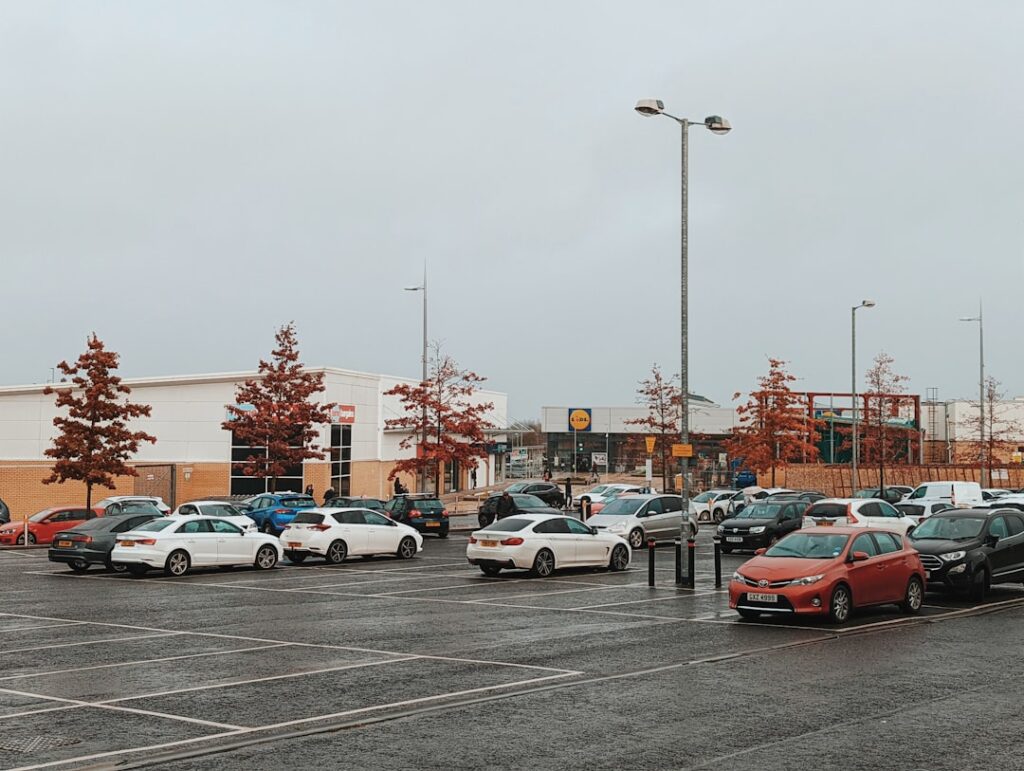
Parking-lot fender-benders, back-out collisions, and door-swing incidents happen every day in New Jersey shopping centers, big-box lots, and apartment complexes. When the driver calls 911, the officer often responds: "That's private property — we can't write a report. Handle it through your insurance." From that moment, victims fall into two dangerous assumptions: first, that the absence of a police report means the crash effectively never happened, and second, that swapping business cards with the other driver is enough. Neither is true. NJ parking-lot crashes support injury and property claims just as regular street crashes do, and the outcome usually turns on what you do in the first few hours.
Legal Concept
A parking-lot collision is technically a "motor vehicle accident," but because it occurs on private property it sits at the intersection of two legal tracks. The first is driver-to-driver fault, which is governed by NJ auto insurance law — PIP benefits and the tort thresholds apply exactly as they do on public roads. The second is premises liability, which arises when the lot itself contributed to the crash — poor lighting, faded lane paint, blind-corner landscaping, missing signage, or unsecured shopping carts. When a lot condition is a proximate cause, the property owner or management company carries its own duty of care independent of the drivers involved.
NJ Rules
New Jersey's reporting statute, N.J.S.A. 39:4-130, requires a report whenever a crash involves injury, death, or property damage over $500. If the responding officer does not write an investigative report, the driver must file a self-report — the SR-1 — with the Motor Vehicle Commission within 10 days of the accident. On private property, NJ police typically decline to write the full investigative report, but many departments will still issue an incident record on request, which memorializes the call and dispatch time. Premises-owner duty is governed by Hopkins v. Fox & Lazo Realtors, 132 N.J. 426 (1993), which set the modern "reasonable care under all the circumstances" standard — a rule that applies to parking lots as fully as it does to store aisles.
Practical Response
If you are in a parking-lot crash, work through the following sequence:
- Photograph the scene immediately in a 360-degree sweep — vehicle positions, damage, pavement condition, lighting, signage, and every CCTV camera you can spot.
- Photograph the other driver's license, insurance card, and license plate. A business card alone is inadequate.
- Get names and phone numbers from bystander witnesses — other shoppers, store employees, or a delivery driver.
- Report the incident inside the store or leasing office and ask for a written incident-report receipt. That document is the anchor for any future claim against the property.
- Send a written CCTV preservation demand to the property manager. Most surveillance systems auto-delete after 7 to 30 days, so a formal spoliation letter is essential.
- Even if the officer refuses to write a report, record their name, badge number, and dispatch time — the CAD log usually survives even when the report does not.
- File the SR-1 with NJ MVC within 10 days. Filing online is allowed, and missing this deadline is grounds for license suspension down the road.
Common Misunderstandings
- "No police report means no case." Wrong. NJ PIP applies on private property, and a tort claim can be built entirely on CCTV, witness statements, and the store's own incident record.
- "The store is always liable because it's their lot." Not exactly. Driver-on-driver crashes usually route through auto insurance first; the premises claim runs in parallel only when a lot condition contributed.
- "It's just a scratch — let's swap cards." Neck and back injuries frequently surface 24 to 72 hours after impact. If the other driver's information was wrong or vanishes, recovery becomes practically impossible.
- "Insurance will take care of it." The other side's adjuster works for the other side. Recorded statements taken early are routinely used against the injured driver later.
Key Takeaways
A parking-lot case is won or lost in the first 30 minutes to 24 hours through evidence preservation. Do not surrender the claim just because no officer wrote a report. File the SR-1 yourself, send the CCTV spoliation letter, get the store's incident record, and collect witness contacts on the spot. Because soft-tissue injuries typically develop over the following days, an ER or orthopedic evaluation within the first 24 hours creates the medical foundation the claim will later depend on.
Key Takeaways
The pattern to remember: NJ private-property crashes are still covered by PIP, still eligible for tort recovery under the same verbal-threshold rules, and often involve a viable premises claim on top. The single biggest mistake is treating "no police report" as the end of the case. It is only a signal that the burden of documenting the scene has shifted entirely to the injured driver, and the tools — photos, CCTV letters, SR-1, incident records — are all available if used in time. Song Law Firm regularly handles NJ and NY parking-lot crashes where early evidence preservation and multi-track claim strategy determine recovery.
SONG LAW FIRM
Need advice on an auto accident or personal injury matter?
📞 201.461.0031 · ✉ mail@songlawfirm.com · 🌐 songlawfirm.com
📍 Parker Plaza, 400 Kelby Street, Suite 1900, Fort Lee, NJ 07024
