
IRS Audit Defense — Correspondence Audit to Minimal Adjustment
The Situation
The client was a self-employed real estate agent in New Jersey who reported business income and expenses on Schedule C. Like many independent agents, the client worked from a home office, drove frequently to meet buyers and sellers, and sometimes met clients and prospects over meals. These ordinary features of a real estate practice produced the deductions that later drew the attention of the Internal Revenue Service.
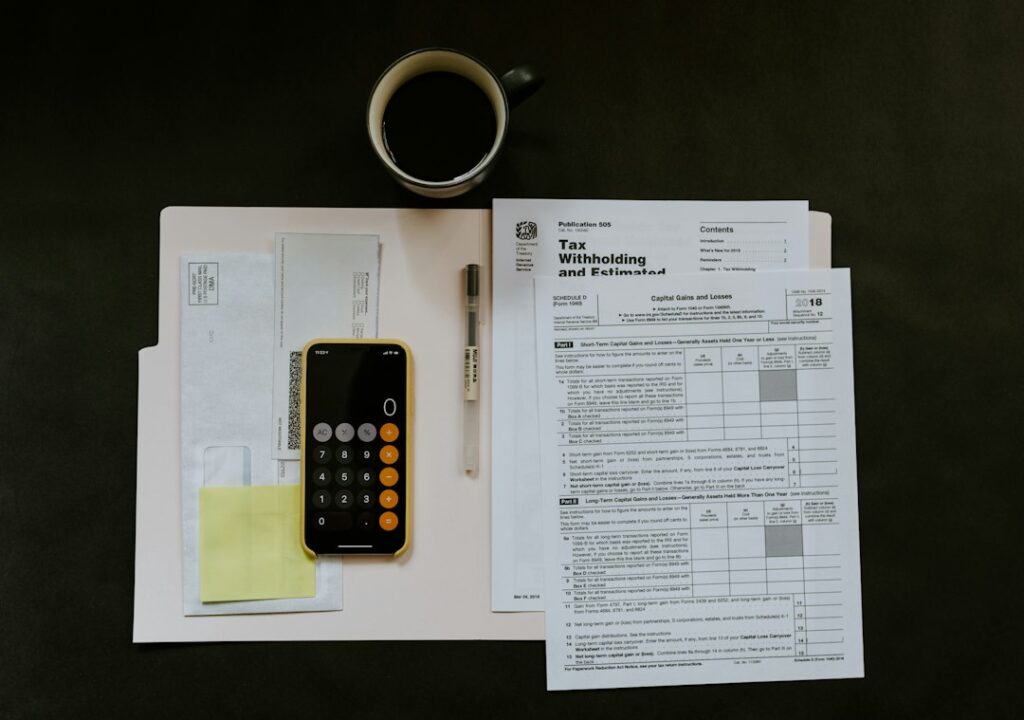
The trouble began with a letter from the IRS. The client had been selected for a correspondence audit, an examination conducted by mail rather than in person. The letter questioned three categories of deductions: the home office, vehicle expenses, and business meals. It asked for supporting documentation and set a short deadline to respond.
The client was anxious. The deductions were real and tied to an active business, but the records were scattered across calendars, phone apps, and old paperwork. The client was unsure what the IRS would accept and worried that a rushed or incomplete answer could lead to disallowed deductions, additional tax, and penalties. The client then contacted Song Law Firm for help preparing a response and dealing with the IRS.
The Legal Issues
The general rule is that a business may deduct ordinary and necessary expenses paid or incurred in carrying on a trade or business. Several categories of expenses, however, carry additional requirements. Home office deductions are generally limited unless a portion of the home is used regularly and exclusively for business and meets the other statutory conditions. A room that doubles as a guest room or family space usually will not qualify, even if business work happens there. For certain expenses, including those for vehicles and other listed property, federal tax law imposes strict substantiation rules. Under those rules a taxpayer generally needs adequate records or sufficient corroborating evidence showing the amount, time and place, and business purpose of the expense. Estimates and after-the-fact guesses often fall short.
Business meals involve their own limits. Even when a meal is properly connected to the business, the deductible amount may be restricted by statute, and the taxpayer still has to show the business connection. In a correspondence audit, the taxpayer’s written submission often carries the case. A clear, well-organized response that tracks these legal requirements can make the difference between a smooth resolution and an escalating dispute.
- 26 U.S.C. §162: The general rule allowing deductions for ordinary and necessary business expenses. It is the starting point for nearly every Schedule C deduction.
- 26 U.S.C. §280A (home office): Limits deductions for business use of a home. A key condition is that the space be used regularly and exclusively for the business.
- 26 U.S.C. §274(d): Imposes strict substantiation requirements on certain expenses, including vehicle and other listed property costs. Taxpayers generally must document the amount, time, place, and business purpose.
Song Law Firm’s Strategy
Song Law Firm first sorted the client’s deductions by the legal standard each one had to meet, then built evidence for each category. For the home office, the central question was whether the space satisfied the regular and exclusive use test. Instead of offering a general statement that the client “worked from home,” the firm documented the space itself. Photographs showed a dedicated work area set up for business, and a floor plan showed where the office sat within the home and that it was separate from personal living areas. This approach speaks directly to the statutory requirement and gives the examiner concrete evidence instead of the taxpayer’s own description.
The vehicle deduction needed the most work. Because vehicle expenses are subject to the strict substantiation rules of 26 U.S.C. §274(d), an incomplete mileage log can put the whole deduction at risk. The client’s real estate practice, however, already generated reliable, date-specific records of business travel. The firm rebuilt the client’s mileage from showing schedules and MLS (Multiple Listing Service) records, matching trips to particular properties, dates, and business purposes. Those records were created in the ordinary course of business, not for the audit, which gave the reconstruction credibility and connected each trip to the elements the statute requires. The firm chose this method because it relied on independent, verifiable records instead of memory.
For business meals, the firm took a measured approach. It applied the correct statutory limitation to the meals that had a genuine business connection. It also reviewed the expenses candidly and conceded items that were personal rather than business-related. Conceding weak items was a deliberate choice. It showed the examiner that the client was acting in good faith and focused the review on the deductions that were well supported. Finally, the firm organized a concise response package that presented each category with its supporting evidence and explanation in a clear format, and it handled all communication with the IRS for the client. Centralizing contact kept the messaging consistent, avoided unnecessary statements, and let the client keep working while the matter was resolved.
Outcome and Takeaways
After reviewing the response package, the IRS allowed most of the client’s deductions. The audit closed with a minimal adjustment, largely reflecting the personal items the client had already conceded, and no penalty was imposed. The client avoided a protracted dispute and resolved the examination through the written correspondence process.
Self-employed professionals in New Jersey and New York who receive a similar IRS letter may find these points useful:
- Take the deadline seriously. Respond on time, or request more time through proper channels, rather than ignoring the letter.
- Match your evidence to the legal test. Home office, vehicle, and meal deductions each have their own requirements, and documentation should address each one directly.
- Use records you already have. Calendars, schedules, and industry records such as MLS data can help reconstruct business activity credibly.
- Be candid about weak items. Conceding personal expenses can strengthen the credibility of the deductions that remain.
Prior results do not guarantee a similar outcome.
Contact Us
Song Law Firm, LLC
Phone: 201.461.0031
Email: mail@songlawfirm.com
Website: songlawfirm.com
Office: Parker Plaza, 400 Kelby Street, Suite 1900, Fort Lee, NJ 07024
Hours: Monday–Friday 09:00–18:00 ET
This material is for general informational purposes only and is not legal advice on any specific matter. Outcomes depend on the applicable state law and the specific facts of each case; please consult a licensed attorney. Attorney Advertising — NJ Rules of Professional Conduct 7.1. Prior results do not guarantee a similar outcome.
