
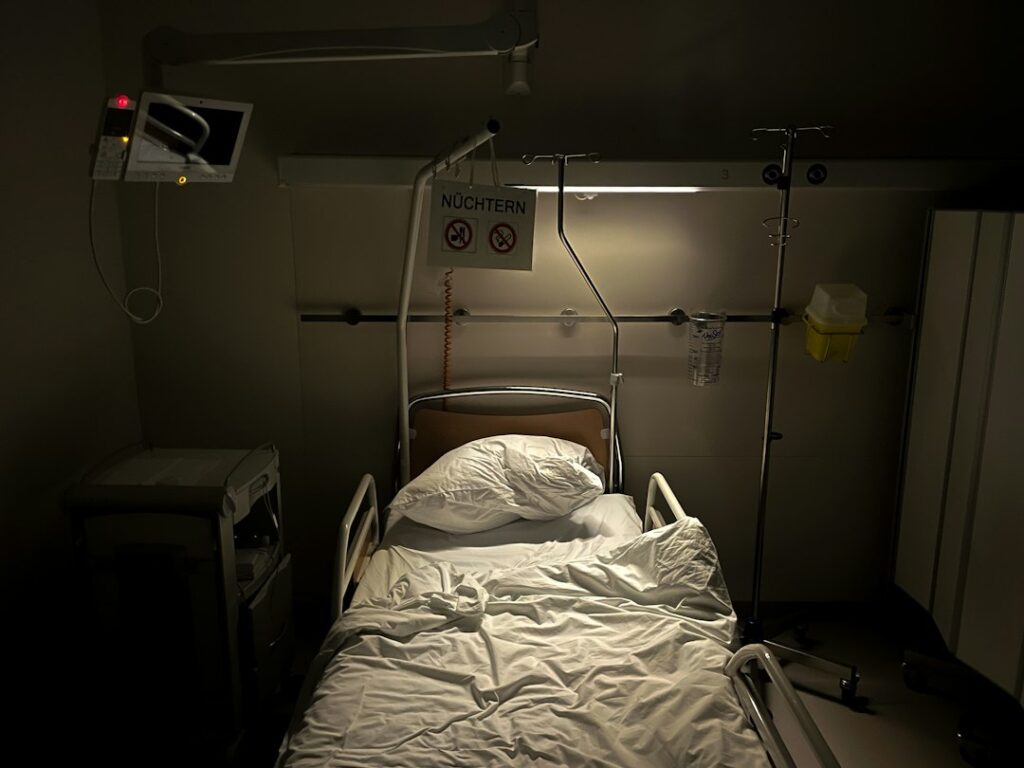
Case Study: Nursing Home Neglect and Pressure Injuries — Proving Violations of the NJ Nursing Home Residents’ Bill of Rights
The Situation
Our client was an adult daughter acting on behalf of her elderly mother. The mother lived in a licensed New Jersey nursing home. After a stroke, she could no longer reposition herself in bed, so she depended entirely on facility staff to turn her, keep her clean and dry, and make sure she drank enough fluids throughout the day. Her safety depended on these routine tasks being done consistently.
Over several weeks, the mother developed a severe, stage 4 pressure injury, the most serious category of pressure wound, along with dehydration. When the family raised concerns, the facility told them the wound was “unavoidable” given her age. Like many families, the daughter was unsure whether to accept that explanation. She was also unsure whether anything could be done about it.
The turning point came when her mother was admitted to the hospital. The treating physicians documented both the wound and the dehydration. That independent medical record gave the family an objective picture of her condition. It also raised a pressing question: was this injury truly unavoidable, or was it the result of care that did not happen? The daughter then contacted Song Law Firm.
The Legal Issues
Nursing home neglect cases in New Jersey often involve two overlapping legal theories. The first is ordinary negligence. A facility that accepts a resident who cannot move independently takes on a duty to provide reasonable care. If it fails to meet that standard and the resident is harmed, the facility may be held responsible. The second theory comes from New Jersey’s Nursing Home Residents’ Bill of Rights. This statute sets out rights that residents of covered facilities hold, and it allows residents to bring a civil action when those rights are violated. Federal regulations governing nursing facilities that participate in federal programs also address quality of care, including the prevention and treatment of pressure injuries. Although these regulations do not by themselves decide a state-court case, they can help show what a facility was expected to do.
Because nursing homes are licensed health care facilities, New Jersey law adds a procedural requirement. In many professional negligence claims against licensed persons, including health care facilities, the plaintiff must serve an Affidavit of Merit. This is a sworn statement from an appropriately qualified professional confirming that the care in question appears to have fallen outside accepted standards. Failing to comply properly and on time can seriously jeopardize a claim. For that reason, this step needed attention from the very beginning.
- N.J.S.A. 30:13-1 et seq. (Nursing Home Residents’ Bill of Rights) — New Jersey’s statute describing the rights of nursing home residents and the responsibilities of the facilities that care for them.
- N.J.S.A. 30:13-8 (private right of action) — The provision that allows a resident whose rights under the statute were violated to bring a lawsuit against the facility.
- N.J.S.A. 2A:53A-27 (Affidavit of Merit) — The requirement that, in certain claims against licensed professionals and facilities, a qualified expert provide a sworn statement supporting the claim.
- 42 C.F.R. §483.25 (quality of care) — A federal regulation addressing the quality of care that participating nursing facilities must provide, including care related to pressure injuries.
Song Law Firm’s Strategy
Getting the complete record. The facility’s explanation was that the wound could not have been prevented. Our first goal was to test that claim against the facility’s own documents. Song Law Firm obtained the full chart. That included turning and repositioning logs, care plans, staffing records and state inspection reports. We chose this approach because a pressure injury case often turns on whether the care that was planned was actually delivered. The repositioning logs showed repeated gaps in turning. The hydration records were incomplete. Those gaps mattered. For a resident who could not move herself after a stroke, missed repositioning and unclear fluid intake are exactly the kinds of lapses that can contribute to skin breakdown and dehydration.
Building the claims on more than one foundation. We asserted both negligence and a claim under the New Jersey Nursing Home Residents’ Bill of Rights, which gives residents a private right of action. We also referenced federal nursing facility requirements for preventing pressure injuries. Combining these theories served a purpose. The negligence claim focused on whether the facility met the standard of care. The statutory claim framed the case around the mother’s rights as a resident. The federal requirements helped explain to the other side what preventive care a facility is generally expected to provide. Together, they gave the case a clear structure grounded in established obligations rather than in sympathy alone.
Meeting the Affidavit of Merit requirement on time. We served a timely Affidavit of Merit from a qualified nursing expert, as New Jersey requires for claims against licensed health care facilities. We chose a nursing expert deliberately, because the core questions involved bedside nursing care: turning schedules, hydration monitoring and care plan implementation. Handling this requirement early removed a common procedural basis for challenging the claim. It also kept the focus on the substance of the care.
Answering the “unavoidable” defense directly. The facility’s central position was that the wound was unavoidable because of the mother’s age. To respond, Song Law Firm retained a wound care expert. That expert reviewed the records and connected the documented staffing and repositioning gaps to the development of the injury. This was the most important part of the strategy. A family’s belief that something went wrong is not enough. The case needed a qualified professional who could explain why the documented lapses mattered medically and why age alone did not account for what happened.
Outcome and Takeaways
The case resolved through a confidential settlement before trial. Just as important to the family, the mother was transferred to a different facility with a new care plan designed around her needs. The terms of the settlement are confidential. For the daughter, the result offered accountability and a fresh start for her mother’s care.
For families facing a similar situation, a few practical lessons stand out:
- Do not accept “unavoidable” at face value. Some pressure injuries may be difficult to prevent. Even so, the facility’s own records may tell a different story, and that question deserves careful review.
- Hospital documentation matters. Records from treating physicians outside the facility can provide an independent account of a resident’s condition.
- Ask about the full chart. Repositioning logs, care plans, hydration records, staffing records and inspection reports can be central evidence in a neglect case.
- Procedural requirements are serious. Claims against licensed health care facilities in New Jersey may require an Affidavit of Merit from a qualified expert. Delay can create avoidable problems.
Prior results do not guarantee a similar outcome.
Contact Us
Song Law Firm, LLC
Phone: 201.461.0031
Email: mail@songlawfirm.com
Website: songlawfirm.com
Office: Parker Plaza, 400 Kelby Street, Suite 1900, Fort Lee, NJ 07024
Hours: Monday–Friday 09:00–18:00 ET
This material is for general informational purposes only and is not legal advice on any specific matter. Outcomes depend on the applicable state law and the specific facts of each case; please consult a licensed attorney. Attorney Advertising — NJ Rules of Professional Conduct 7.1. Prior results do not guarantee a similar outcome.
