
PERSONAL INJURY LAW · SONG LAW FIRM COLUMN
Situation
Korean and Chinese restaurants in Fort Lee, Palisades Park, and Flushing often present elevated slip-and-fall risk — narrow aisles, grease-laced tile, and condensation driven by sharp indoor-outdoor temperature changes. Song Law Firm attacks these premises-liability cases through one primary axis: notice. Proving both actual and constructive notice dramatically raises the probability of a liability finding against the owner.
Legal Concept
New Jersey premises liability turns on the visitor's status:
- Invitee (customer): the highest duty — warn of known hazards and reasonably inspect and repair
- Licensee (permitted visitor): warn of known hazards only
- Trespasser: only a prohibition on willful or wanton misconduct
Restaurant patrons are invitees and receive the strongest protection. For liability the plaintiff must show (1) a hazardous condition, (2) actual or constructive notice to the owner, and (3) failure to take reasonable action after that notice.
NJ Rules
- Restuccio v. Shoprite Supermarket Inc. and related cases establish the "mode of operation" doctrine — in self-service and buffet settings, the notice element is relaxed and the owner's inspection burden heightened
- NJ Food Safety (N.J.A.C. 8:24): specifies cleaning cycles for floors and kitchens
- Fort Lee Municipal Code: commercial-space flooring and drainage standards
Practical Response
Evidence Song Law Firm secures immediately:
- Scene photos and video (floor condition, wet-floor sign presence, taken by the injured guest or companion)
- CCTV covering 2 hours before the fall — retention typically 72 hours
- Owner's incident report (Preservation Letter if refused)
- Staff shift schedules and cleaning logs
- Fire Department and EMS reports
- Immediate photos of the shoes worn (grease stain or foreign-substance evidence)
Common Misunderstandings
- "The person who fell was being careless." Invitee status still puts the owner's duty first
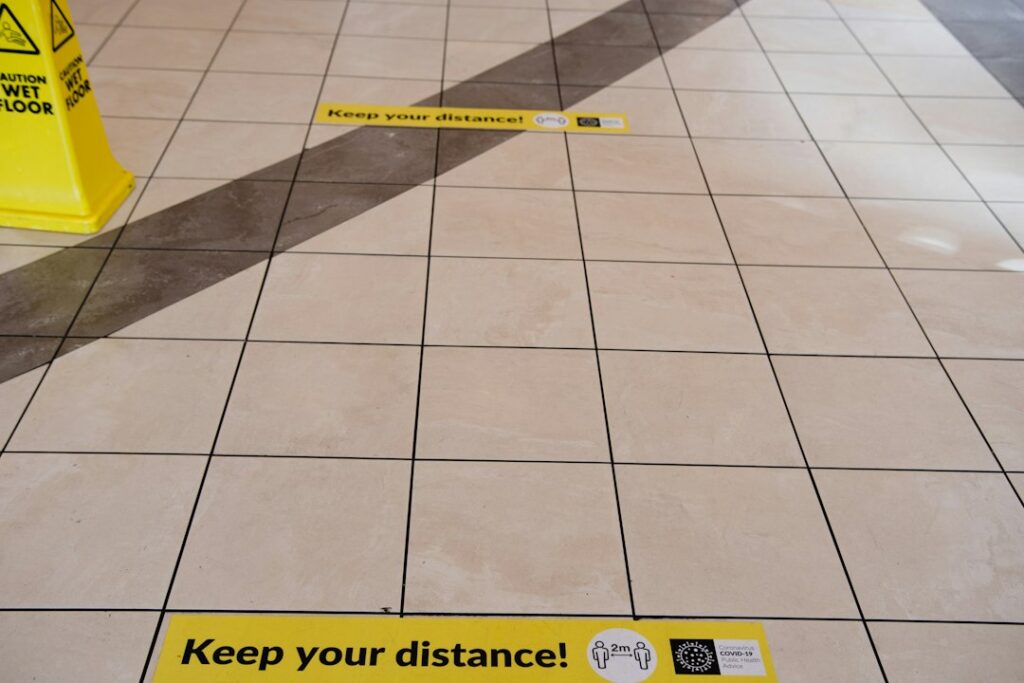
- "There was a wet-floor sign, so we're covered." The sign's placement, visibility, and sightline matter
- "Just ask them for the CCTV." Without a written preservation demand the footage can be overwritten within 72 hours
Key Takeaways
- Restaurant guests are invitees — the owner's duty is at its highest
- Proving both actual and constructive notice is pivotal
- Send the CCTV preservation letter the same day
- The mode-of-operation doctrine eases the notice element in self-service and buffet settings
FAQ
- Q. There was water on the floor, but the wet-floor sign was 10 feet away.
- A. Sign placement and visibility are elements of notice adequacy. If the sign is not within the guest's natural line of sight, the owner's duty may still be deemed unmet.
- Q. The restaurant claims the guest spilled her own food.
- A. Mode-of-operation increases the owner's inspection burden in self-service / buffet venues; even without actual notice, constructive notice can establish liability.
- Q. The restaurant refuses to turn over CCTV.
- A. A Preservation Letter preserves the right to argue spoliation at trial, which can produce an adverse inference against the restaurant.
Disclaimer
This article provides general information about New Jersey premises liability and is not legal advice. Song Law Firm representation begins only after a signed retainer.
SONG LAW FIRM
Need advice on an auto accident or personal injury matter?
📞 201.461.0031 · ✉ mail@songlawfirm.com · 🌐 songlawfirm.com
📍 Parker Plaza, 400 Kelby Street, Suite 1900, Fort Lee, NJ 07024
