
IMMIGRATION LAW · SONG LAW FIRM SUCCESS STORY
Client Profile
A late-30s Film/TV editor client with an established career in the Asian creative market and long-standing collaborative relationships with U.S. production studios. The client was working in the United States under an O-1B visa, contributing editorial work to multiple ongoing projects. This case involved an O-1B extension petition.
Case Background
As the client's initial O-1B validity period approached expiration, extension approval was required to continue committed post-production projects. Editing is a discipline where USCIS scrutinizes both the individual's artistic judgment and — critically — the recognition and reach of the projects the editor has contributed to. In recent adjudication cycles, USCIS has issued Requests for Evidence (RFEs) at higher rates on O-1 petitions, so even extension filings must be documented at a level comparable to a new petition.
Legal Issues · USCIS Standards
O-1B visas are available to individuals of extraordinary ability in the arts or extraordinary achievement in motion picture or television. Statutory basis: 8 U.S.C. § 1101(a)(15)(O). Implementing regulations: 8 C.F.R. § 214.2(o).
O-1B (arts) petitioners must satisfy one of the following:
- Receipt of a nationally or internationally recognized award (e.g., Academy Award, Emmy, Grammy), OR
- At least three (3) of the following six evidentiary categories:
1. Lead or starring role in productions or events of distinguished reputation
2. Critical reviews or published material about the beneficiary
3. Recognition from organizations or critics of distinguished reputation
4. Record of commercial or critically acclaimed success
5. Recognition from prominent organizations or experts
6. High salary or remuneration compared to peers in the field
For extension petitions, USCIS also evaluates whether the beneficiary actually performed O-1 work during the prior validity period and whether the forward-looking plan is concrete and consistent with the O-1 classification.
Song Law Firm Strategy
1. In-depth Project Recognition Development — We audited the client's editorial credits and selected projects with meaningful distribution scale, theatrical/broadcast performance, and awards recognition. For each selected project, we compiled press coverage, box office or ratings data, and industry reception.
2. Strong Letters of Recommendation — We coordinated with the employer and industry leaders to draft detailed recommendation letters describing the client's editorial contributions, indispensability, and the necessity of continued engagement on upcoming projects.
3. Media Coverage Compilation — We systematically aggregated reviews and interviews from major trade publications and mainstream outlets that referenced the client's work.
4. Forward-Looking Work Plan — We prepared a comprehensive itinerary of upcoming projects with production timelines, studio agreements, editing schedules, and expected deliverables — demonstrating continued high-level O-1 activity.
5. Preemptive RFE Defense — Reflecting current USCIS adjudication trends on O-1B, we included preemptive argumentation on likely challenge points (whether "editor" qualifies as a "critical role," how project recognition is established) directly within the initial petition brief.
Process and Timeline
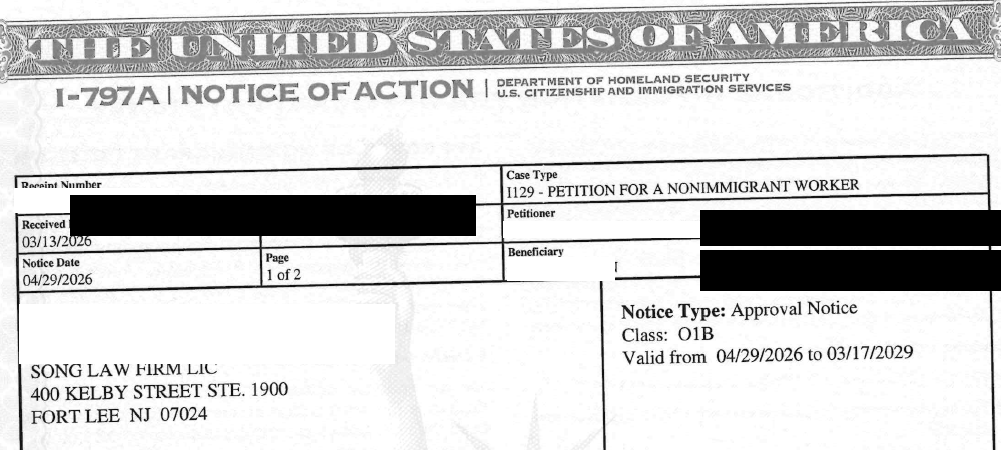
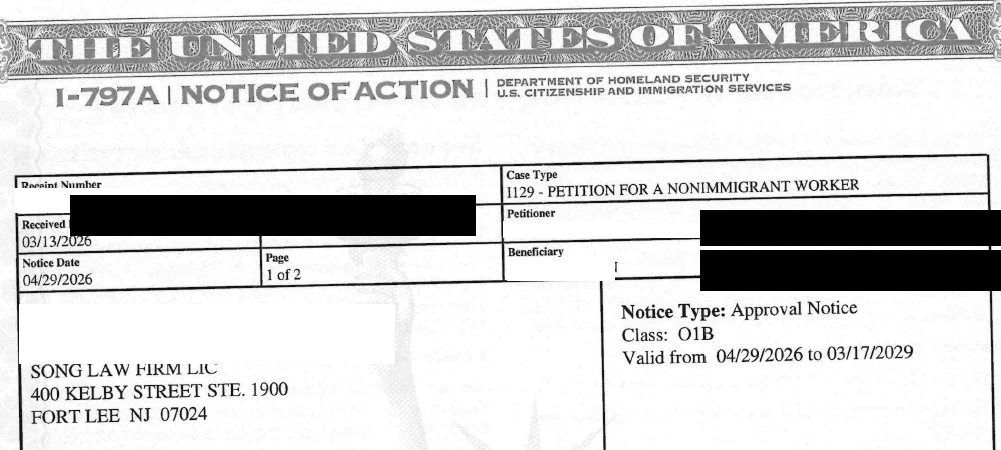
- I-129 Petition Received: March 13, 2026 (USCIS Received Date)
- USCIS Notice Date: April 29, 2026 (Approval Notice)
- Adjudication Time: Approximately 47 days — approved on first review without an RFE
- Validity Period: 04/29/2026 to 03/17/2029 (approximately 3 years)
Result
Notice Type: Approval Notice. Class: O-1B. Case Type: I-129 (Petition for a Nonimmigrant Worker). The petition was approved on first review with no RFE, allowing the client to continue committed post-production projects without interruption.
Lessons Learned
- O-1B extensions are not automatic. USCIS reviews prior-period activity and forward-looking plans at a level comparable to new petitions; project documentation, recommendation letters, and media evidence must be organized to new-petition standards.
- Editorial roles are often perceived as "behind the camera" — establishing "critical role" is the pivotal element. Project credits should specify the editor's discretionary scope, collaborative dynamic with the director, and contribution to the final cut.
- With elevated RFE risk in the current adjudication climate, preemptive defense within the initial petition brief is a key strategy to improve approval odds.
- Because Film/TV O-1B activity typically operates on project cycles, extension preparation should begin at least 4-6 months before validity expires.
SONG LAW FIRM
Facing a similar O-1 matter? Schedule a consultation today.
📞 201.461.0031 · ✉ mail@songlawfirm.com · 🌐 songlawfirm.com
📍 Parker Plaza, 400 Kelby Street, Suite 1900, Fort Lee, NJ 07024
