
PERSONAL INJURY LAW · SONG LAW FIRM COLUMN
Situation
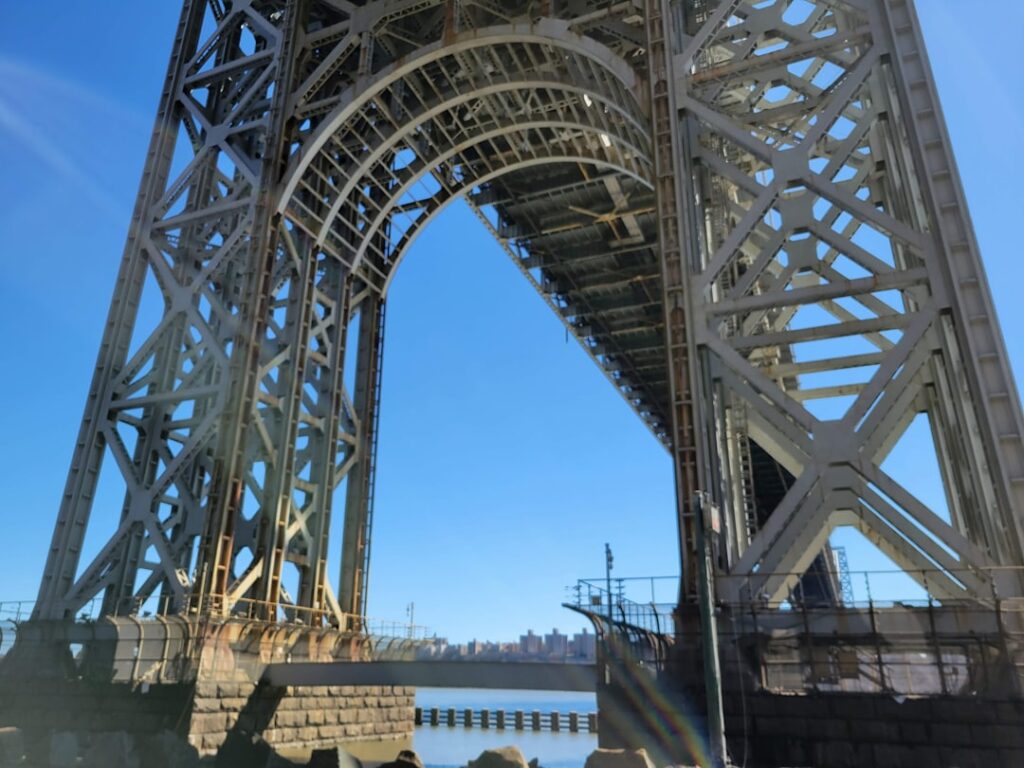
Fort Lee's Palisade Avenue and Bridge Plaza, together with Palisades Park's Broad Avenue and Grand Avenue, form the commercial spine of northern New Jersey's Korean community and remain some of Bergen County's busiest crash corridors. Narrow lanes, frequent left turns, dense on-street parking, and heavy commuter flow toward the George Washington Bridge combine to produce recurring low-speed rear-end collisions, side-swipes, and parking-lot incidents. Korean drivers involved in these accidents typically hit two walls at once: a language barrier at the ER and the police scene, and a documentation barrier when medical records and statements later need to be translated for an insurer or a court.
Legal Concept
Documents that support a claim or that will be introduced as evidence must convey the source text without distortion. In the United States this is known as a certified translation, and it is accompanied by a Certificate of Translation Accuracy in which the translator affirms that the translation is a complete and accurate rendering of the original. A simple translation prepared by a friend or family member may be useful for personal reference, but it is unlikely to be accepted by insurance adjusters, defense counsel, or a court. Mistranslated statements are not cosmetic errors; they can alter comparative fault percentages and damages calculations. The distinction matters most when the source is a spoken exchange rendered by a bystander at the scene, because those informal renderings often surface again in adjuster interviews and depositions.
NJ Rules
In New Jersey, the standard police crash report (NJTR-1) is obtained from the investigating agency's Records Bureau through a written request, with some departments offering online portals. Request forms, fees, and processing timelines follow the New Jersey Attorney General's guidance and each municipality's records policy. Medical records fall under HIPAA (45 CFR § 164.524), which generally entitles the patient to receive requested records within thirty days, subject to a reasonable copying fee. When interpretation was used during ER care, the patient should verify that the interpreter's name and mode of interpretation appear in the chart.
Practical Response
At the scene, rather than improvising an English summary of what happened, keep your statement short, factual, and in Korean, and ask the officer to arrange language support such as Language Line. Avoid apologetic phrases like "I'm sorry," which can be construed as an admission of fault in the United States, and describe pain honestly without exaggeration. In the emergency room, if interpretation is offered, ask that the interpreter's identity and the interpretation method (in-person, phone, or video) be documented in the chart. Later, keep the police report, discharge summary, prescriptions, imaging reports, and specialist notes together with their certified translations as a matched set. When you later hand the file to counsel, that matched set shortens the review considerably and reduces the chance that a translation gap becomes an evidentiary weakness during negotiation.
Common Misunderstandings
The belief that "I speak some English, so I can translate my own records" is risky. Insurance reviewers and opposing counsel evaluate a document's reliability first by looking at the translator's credentials and the presence of a signed certificate. Another frequent misconception is that a favorable police report ends the dispute. In practice, opposing insurers routinely challenge report narratives, so witness statements, scene photographs, and dashcam footage should be collected in parallel to close off those attacks. A third assumption worth retiring is that the officer's on-scene coding of fault is binding; it is one input among many, and adjusters and juries look past it when other evidence tells a different story.
Key Takeaways
- Fort Lee and Palisades Park's Korean commercial corridors see frequent low-speed and parking-lot collisions.
- The NJTR-1 police report and hospital records each have their own request path and timing — start early.
- Documents used for claims or litigation should be certified translations with an accuracy statement attached.
- Avoid apologetic or self-blaming language at the scene and stick to observable facts.
- Record the interpreter's identity and method to reduce the risk of mistranslation later.
FAQ
Q1. What if the hospital says no interpreter is available?
Most U.S. hospitals must offer free interpretation under Title VI of the Civil Rights Act. Even if in-person interpretation is not immediately available, patients can request phone or video interpretation, and documenting both the request and the hospital's response supports the accuracy of the medical record later.
Q2. Can a police report be corrected if my statement was mistranslated?
Factual errors can be raised in writing with the department's Records Bureau, which may issue a supplemental report. Opinion and interpretation sections are not typically amended, so if mistranslation is suspected, submitting a separate signed statement and supporting evidence is often more effective than trying to rewrite the officer's narrative.
Q3. How do I obtain a full copy of my medical records?
Submit a written request to each treating hospital's Medical Records (or Health Information Management) department. If care was provided across multiple facilities, each request must be sent separately, listing the date of the accident, patient identifiers, and the scope requested.
Q4. Where can certified translations be obtained?
Translators registered with the American Translators Association or firms experienced with legal filings are common choices. Song Law Firm's Korean- and English-fluent team reviews the document set together with the client when a claim or lawsuit is being prepared.
Q5. My pain appeared several days after the crash. Is that too late?
Neck and back injuries frequently develop with delay. Seek care as soon as symptoms appear and ask that the connection to the accident be noted in the chart, since that link matters when the claim is later evaluated.
SONG LAW FIRM
Need advice on an auto accident or personal injury matter?
📞 201.461.0031 · ✉ mail@songlawfirm.com · 🌐 songlawfirm.com
📍 Parker Plaza, 400 Kelby Street, Suite 1900, Fort Lee, NJ 07024
