
PERSONAL INJURY LAW · SONG LAW FIRM COLUMN
Situation
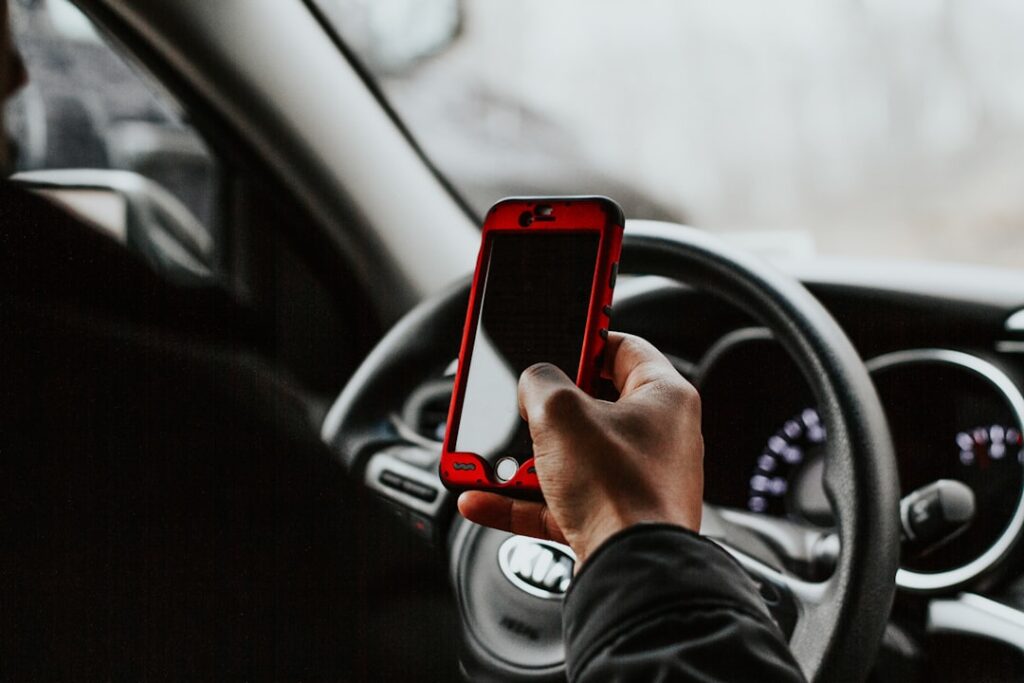
Rear-end collisions on the NJ Turnpike, Route 46, or Garden State Parkway increasingly involve a driver who was texting, scrolling social media, or watching a video moment before impact. When the at-fault driver claims "the car in front stopped suddenly," and injuries surface days later as whiplash or cervical disc issues, the insurance carrier will aggressively frame the crash as a low-impact event unless the plaintiff can prove the driver's attention was elsewhere. Cell phone records are the single most persuasive piece of evidence in that fight, but obtaining them requires a disciplined preservation and subpoena strategy that begins in the hours after the crash.
Legal Concept
New Jersey's hands-free statute, N.J.S.A. 39:4-97.3, prohibits holding a wireless device to talk, text, or access data while driving. A violation contemporaneous with a crash supports a negligence per se theory, which lets the plaintiff argue that the statutory breach itself establishes the standard of care. Beyond the driver, the New Jersey Supreme Court's decision in Kubert v. Best, 432 N.J. Super. 495 (App. Div. 2013), recognized a novel duty owed by a remote texter who knows the recipient is driving and will likely read the message. That doctrine expands potential defendants beyond the driver to companions who send texts into an active driving session.
NJ Rules
Major carriers such as Verizon, T-Mobile, and AT&T retain call detail records, SMS metadata, data session logs, and cell-tower connection information, but retention windows are short and vary by carrier. The Stored Communications Act, 18 U.S.C. Section 2701 et seq., generally shields the content of text messages from disclosure through a civil subpoena. What is obtainable through a properly issued civil subpoena includes timestamps of calls and texts, numbers dialed or received, data usage sessions, and the cell sites that handled each transmission. Under New Jersey Court Rule 4:14-7, plaintiff's counsel serves a subpoena duces tecum on the carrier once suit is filed, and issues separate discovery demands directed at the driver's handset for application usage logs, screen-time reports, and cloud backups.
Practical Response
Step one is a spoliation preservation letter delivered to the at-fault driver, the driver's insurer, and each identified carrier as soon as counsel is retained. The letter must specifically identify call detail records, SMS logs, MMS logs, data sessions, app usage, cloud backups, and any dashcam or infotainment console recordings. Step two is scene evidence. The client, or a passenger, should photograph the interior of the other vehicle if safe to do so, especially the position of any phone on the dashboard, mount, cupholder, or passenger seat. Independent witnesses should be asked whether they saw the driver looking down, holding a device, or reacting late to traffic ahead. Written statements taken within days carry far more weight than recollections offered months later. Step three is video: the client's own dashcam, any nearby business surveillance, traffic cameras operated by NJDOT, and residential doorbell cameras along the route.
Once litigation is underway, retaining a digital forensics expert lets the case move from carrier metadata into device-level analysis. A qualified examiner can extract iOS Screen Time entries, Android Digital Wellbeing reports, iMessage or WhatsApp timestamps, and even Apple Health step-count gaps that correlate with attention on the phone. When paired with black-box event data recorder downloads from both vehicles, the forensic timeline can pinpoint the exact seconds during which the defendant's eyes and hands were on the device rather than the road.
Common Misunderstandings
One frequent misconception is that if the police report does not mention phone use, the theory is dead. Civil discovery is independent of the criminal investigation, and officers rarely have grounds to seize a driver's phone at the scene. A second misconception is that using a hands-free device is automatically a complete defense. New Jersey courts have recognized ordinary negligence when a driver, even lawfully hands-free, was so absorbed by a screen or a conversation that they violated the general duty to keep a proper lookout. A third misconception is that carriers refuse to produce anything. That is only half true — content is protected, but metadata, timestamps, and cell-site records are routinely produced pursuant to a valid civil subpoena.
Key Takeaways
Proving distracted driving in a New Jersey personal injury case is a race against retention clocks and device wipes. The winning playbook combines an immediate preservation letter, disciplined scene documentation, early video collection, a Rule 4:14-7 subpoena to each carrier, targeted discovery directed at the defendant's handset, and forensic analysis by a qualified expert. Kubert v. Best remains available where a remote texter knew the recipient was driving, meaning the pool of potential defendants can extend beyond the driver behind the wheel.
FAQ
Q1. How soon should a preservation letter go out?
As early as counsel can be retained. Carrier retention windows for detailed metadata are often measured in months, not years, and a defendant who suspects litigation may replace or reset the device.
Q2. Can the sender of a text also be sued?
Under Kubert v. Best, a remote texter who knew the recipient was driving and would likely view the message can face a duty of care. The evidentiary threshold for proving that knowledge is high, but the doctrine remains viable.
Q3. Will the carrier produce the actual content of text messages?
Generally no. The Stored Communications Act protects content from disclosure in most civil cases. Metadata — timestamps, numbers, session logs, and cell-tower routing — is obtainable through a properly issued subpoena.
Q4. What if my own phone was in use at the time of the crash?
New Jersey follows modified comparative negligence, so a plaintiff may still recover if the other driver bears greater fault. Accurate disclosure of your own conduct is essential to preserve credibility.
Q5. Does dashcam footage alone prove distraction?
Dashcam video showing a late or absent reaction supports the theory but rarely proves distraction by itself. Combined with carrier metadata and device forensics it becomes powerful.
This column provides general legal information and is not legal advice for any specific case. New Jersey and New York personal injury inquiries are handled by Song Law Firm.
SONG LAW FIRM
Need advice on an auto accident or personal injury matter?
📞 201.461.0031 · ✉ mail@songlawfirm.com · 🌐 songlawfirm.com
📍 Parker Plaza, 400 Kelby Street, Suite 1900, Fort Lee, NJ 07024
