
IMMIGRATION LAW · SONG LAW FIRM SUCCESS STORY
Client Profile
- A digital media and brand strategy professional from Asia (anonymized), who built on a broadcasting background to extend cinematic storytelling methods into branding, online education, and publishing.
- The client has a large audience across podcast and video platforms and has produced results in online courses and fashion brand collaborations.
- A U.S. agency acted as petitioner, filing the O-1A petition together with an extension of stay.
Case Background
Because the client works with several clients and projects at once, an agent petitioner was a better fit than a single employer. The petition was filed with premium processing in August 2026, and USCIS issued a Request for Evidence (RFE) in early September.
Legal Issues
O-1A requires extraordinary ability in the sciences, education, business, or athletics. The beneficiary must meet at least three criteria under 8 CFR 214.2(o)(3)(iii), followed by a final merits review of the full record. In the RFE, USCIS acknowledged that the "published material about the beneficiary in major media" criterion appeared to be met, but questioned two others:
- Original contributions of major significance in the field
- Employment in a critical or essential capacity for organizations with a distinguished reputation
For agent petitions, USCIS also reviews the itinerary and the substance of each underlying engagement.
Song Law Firm Strategy
- We reframed the client's contribution not as follower counts but as a methodology that applies cinematic narrative structure to brand strategy, online education, and intellectual-property businesses.
- We added independent third-party evidence: a publisher that approached the client first and then signed a formal publishing agreement, enrollment and revenue records for her online courses, and a retailer's own published materials on a brand pop-up activation.
- We showed the client's contractual responsibilities for curriculum design, instruction, and content planning, along with the revenue-sharing structure, to make the critical-role claim concrete.
- We mapped how the new evidence connected to the evidence already in the initial filing so the officer could evaluate the record as a whole.
Process and Timeline
- August 2026: O-1A petition and extension of stay filed by the agent petitioner (premium processing)
- Early September 2026: RFE issued
- Early October 2026: RFE response submitted
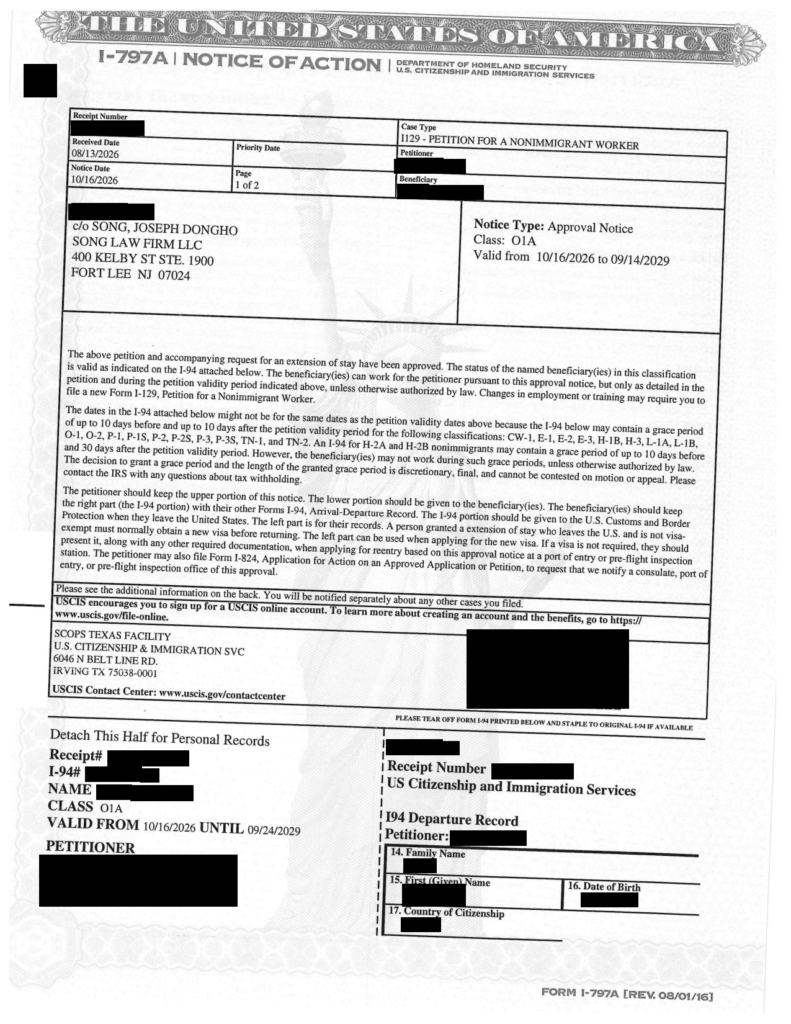
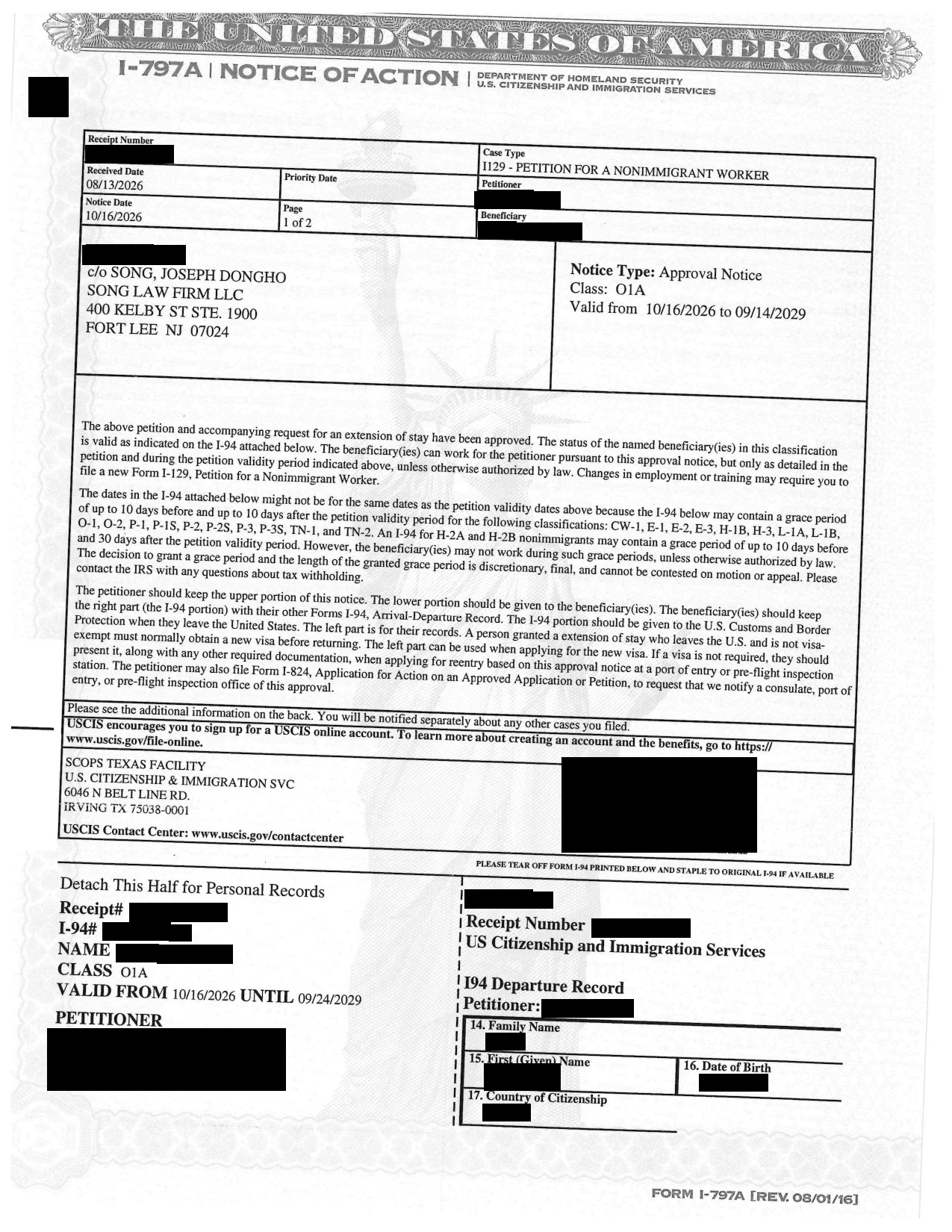
- Mid-October 2026: approved
Result
In October 2026, USCIS approved the O-1A petition and the extension of stay, with a validity period of about three years, so the client can continue her projects in the United States.
Lessons
- For social-media-based professionals, O-1A cases turn on third-party evidence of industry impact, not raw numbers.
- In an RFE response, ask USCIS to keep criteria it has already accepted and focus the response on the disputed ones.
- Professionals who serve multiple clients should consider an agent petition structure.
SONG LAW FIRM
Facing a similar immigration matter? Schedule a consultation today.
📞 201.461.0031 · ✉ mail@songlawfirm.com · 🌐 songlawfirm.com
📍 Parker Plaza, 400 Kelby Street, Suite 1900, Fort Lee, NJ 07024
