
PERSONAL INJURY LAW · SONG LAW FIRM COLUMN
Situation
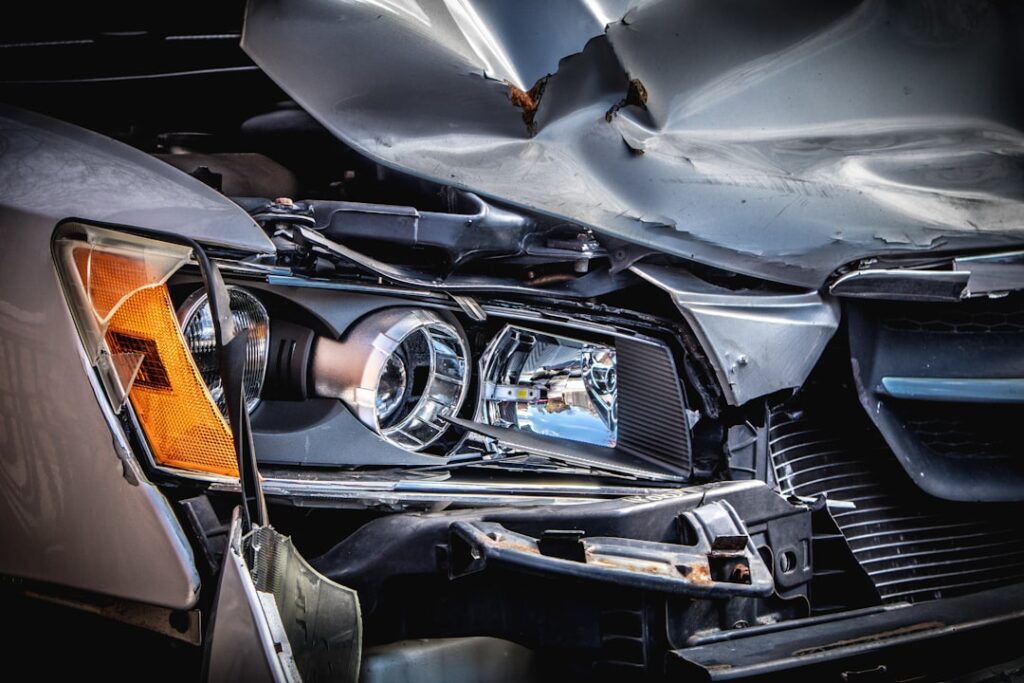
Head-on collisions are among the most catastrophic types of traffic accidents in New Jersey. According to NHTSA data, head-on crashes account for roughly 2% of all collisions but more than 10% of traffic fatalities. When one vehicle crosses the centerline into oncoming traffic, the relative impact speed becomes the sum of both vehicles' speeds, producing forces the human body cannot absorb.
Risk is highest on undivided two-lane rural roads, sharp curves, and nighttime low-visibility stretches. NJ Route 4, Route 46, Palisades Interstate Parkway, and portions of Route 17 have seen repeated wrong-way entry collisions, particularly involving impaired or disoriented drivers entering from off-ramps.
Legal Concept
Fault analysis for head-on collisions turns on two pillars. First is right-of-way violation. N.J.S.A. 39:4-90 governs intersection and lane-priority rules, and any driver who crosses the centerline or leaves a designated lane faces a presumption of negligence.
Second is the mechanism of intrusion. Why did the other driver cross the centerline — intoxication, drowsy driving, phone use, seizure, loss of consciousness? These distinctions matter because they separate ordinary negligence from recklessness, and only the latter opens the door to punitive damages.
NJ Rules
New Jersey courts treat crossing the centerline as prima facie evidence that the driver failed to maintain his or her own lane. However, several affirmative defenses can rebut this presumption.
- Loss of vehicle control due to a road defect (pothole, standing water)
- Sudden emergency (avoiding another driver's dangerous maneuver)
- Medical emergency (heart attack, seizure) — the Sudden Emergency Doctrine
Plaintiffs must anticipate these defenses with hospital records, accident reconstruction experts, and witness statements. Medical emergency defenses in particular hinge on whether the driver had prior notice of the underlying condition and whether prescribed medications should have led to a decision not to drive.
Practical Response
In the immediate aftermath of a head-on collision, secure the following.
- Request a copy of the NJ Police Crash Investigation Report (NJTR-1); it contains the responding officer's initial fault assessment
- Photograph the scene: final resting positions of both vehicles, skid marks, debris distribution
- Collect contact information for at least three independent witnesses
- Send a preservation letter for the other vehicle's Event Data Recorder (EDR) data
- Identify and request preservation of CCTV or toll-plaza cameras — most systems overwrite within 30 days
- Request blood alcohol and drug test results on the other driver through law enforcement
Seek emergency medical evaluation the same day. Head-on collisions commonly produce delayed-onset symptoms — whiplash, thoracic contusion, concussion, spinal compression fractures — and gaps in the initial medical record dramatically weaken any later claim.
Common Misunderstandings
- "I was in my lane, so I automatically win 100%." Be prepared for defense arguments; automatic wins do not exist in NJ tort practice.
- "Proving centerline crossing is enough." You still need to prove damages — medical expenses, lost wages, pain and suffering — and satisfy the verbal threshold under AICRA to reach non-economic recovery.
- "The police report decides fault." The NJTR-1 fault indication is admissible for reference but is not binding on the court.
Key Takeaways
- Head-on collisions carry the highest injury and fatality profile
- Centerline crossing creates a presumption of negligence under NJ law
- Prepare for sudden-emergency and road-defect defenses with expert reconstruction
- Medical records, police report, and EDR data form the evidentiary core
- Recklessness (DUI, texting) may unlock punitive damages
FAQ
Q1. How much more compensation is available if the other driver was intoxicated?
DUI supports a recklessness finding, which unlocks punitive damages. NJ's Punitive Damages Act (N.J.S.A. 2A:15-5.9 et seq.) caps such damages at five times compensatory damages or $350,000, whichever is greater.
Q2. What if the at-fault driver died in the collision?
The claim proceeds against the deceased driver's estate and their auto insurance carrier. Death of the tortfeasor does not extinguish civil liability.
Q3. What if the other driver was uninsured?
Your own Uninsured Motorist (UM) coverage applies. NJ requires minimum UM limits of $15,000/$30,000, but $100,000+ is strongly recommended for meaningful protection.
Q4. Can I undo a document I signed at the scene?
On-scene documents are typically only information-exchange forms, not final releases. However, quick settlement releases presented by an insurer within days of the crash are binding once signed — always consult counsel first.
Q5. What is the statute of limitations?
NJ personal injury actions must be filed within two years of the accident under N.J.S.A. 2A:14-2. Tolling applies only in narrow circumstances (minors, incapacity).
SONG LAW FIRM
Need advice on an auto accident or personal injury matter?
📞 201.461.0031 · ✉ mail@songlawfirm.com · 🌐 songlawfirm.com
📍 Parker Plaza, 400 Kelby Street, Suite 1900, Fort Lee, NJ 07024
