
IMMIGRATION LAW · SONG LAW FIRM SUCCESS STORY
Client Profile
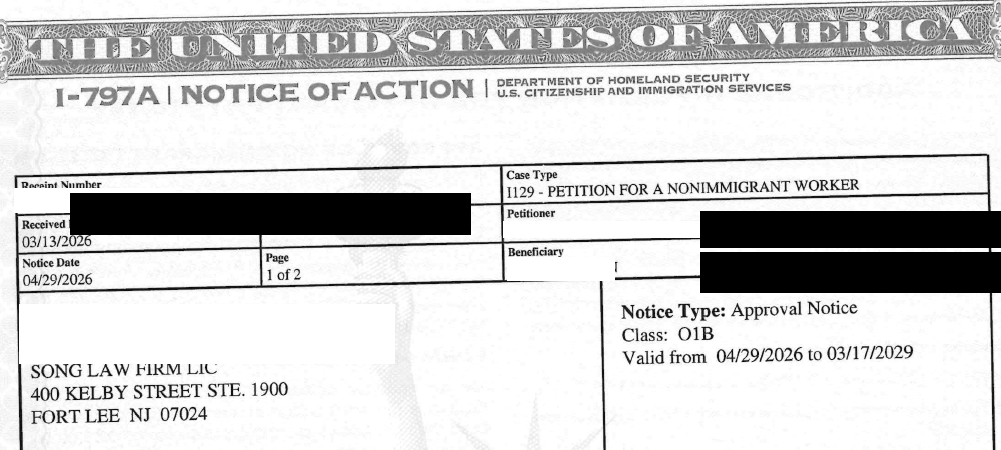
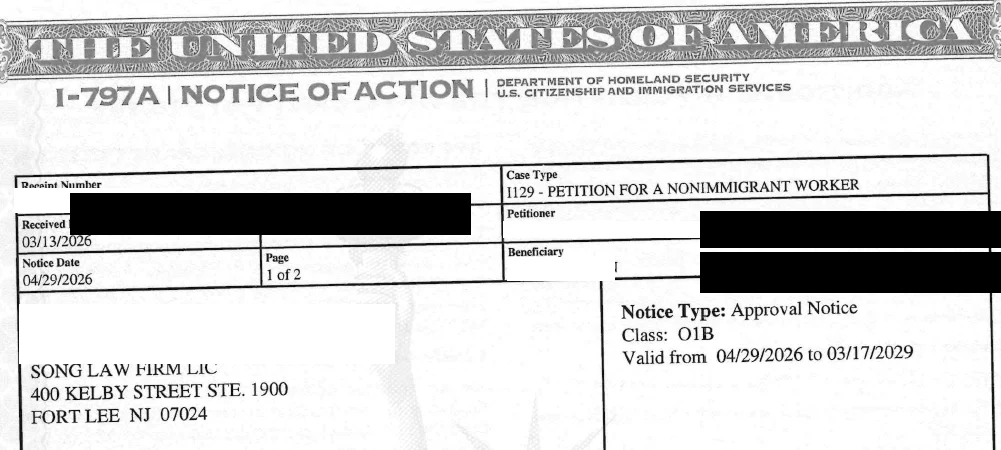
A Korean-national postdoctoral researcher in a STEM field, based at a New Jersey research institution. The client's work centers on artificial intelligence and machine learning applied to medical imaging, with an established record of peer-reviewed journal publications and international conference presentations. Previously in O-1 status, the client sought long-term U.S. settlement and greater freedom of research direction, and elected to pursue an EB-2 National Interest Waiver (NIW) self-petition for permanent residency.
Case Background
While the client's academic record was strong, the traditional EB-2 category requires an employer sponsor and Labor Certification (PERM). The client wanted the flexibility to move between multiple research institutions and potentially participate in startup ventures, and therefore benefited most from the National Interest Waiver route, which eliminates the employer-sponsor requirement. Since the AAO's 2016 Matter of Dhanasar decision, NIW petitions must satisfy a three-prong test, and USCIS applies updated 2022 guidance for STEM-field applicants, requiring rigorous evidentiary framing.
Legal Issues
Under INA 203(b)(2)(B)(i) and Matter of Dhanasar, three prongs must be met:
- Prong 1 (Substantial Merit and National Importance): The proposed endeavor has substantial merit and national importance.
- Prong 2 (Well Positioned): The petitioner is well positioned to advance the endeavor.
- Prong 3 (Beneficial to Waive): On balance, waiving the job-offer and Labor Certification requirements would benefit the United States.
The critical challenge in this matter was Prong 3 — articulating a persuasive rationale for waiving the labor market test. USCIS's 2022 STEM guidance offers favorable factors for petitioners in critical and emerging technology areas, but merely citing the guidance is insufficient; specific factual argumentation tied to the petitioner's profile is required.
Song Law Firm Strategy
Song Law Firm's immigration team executed the following approach:
- Cited U.S. government publications (from NIH, NSF, and national security frameworks) that identify the client's technology area as a priority, to support the national importance analysis under Prong 1.
- Assembled quantitative indicators of the client's individual qualifications under Prong 2, including citation counts, peer-review history, and international speaking engagements.
- Under Prong 3, argued that the delay inherent in Labor Certification would harm U.S. interests in this technology area, and that the client's ability to participate flexibly across multiple research collaborations and potential startup ventures made the waiver squarely aligned with the national interest.
- Secured three independent expert opinion letters from third-party experts with no direct interest in the client's career, framed to present objective assessments rather than generic endorsements.
- Prepared a detailed prospective work plan spanning five years, with specific milestones and named potential U.S. collaborating institutions.
Process
After filing Form I-140 with Premium Processing, the case was adjudicated within 15 business days. USCIS did not issue a Request for Evidence (RFE); the submitted record was sufficient on its face, and the petition was approved on the initial review. Adjustment of Status (Form I-485) was filed concurrently with EAD and Advance Parole applications.
Result
The client's EB-2 NIW self-petition was approved without an RFE, enabling permanent residency progress without dependence on any specific employer. The approval preserves flexibility for future research mobility, startup participation, and multi-institution collaboration, and provides a stable foundation that can lead, over time and subject to eligibility, to U.S. citizenship.
Lessons
- In STEM NIW petitions, the 2022 USCIS policy guidance provides favorable factors, but the petitioner must specifically demonstrate why their work fits within that framework rather than merely citing it.
- The Dhanasar three-prong test is most persuasive when presented as an interconnected narrative rather than a checklist.
- Expert letters are evaluated on quality, not quantity. Third-party experts without a financial or professional stake in the petitioner's career carry the most weight.
- Self-petition through NIW is a powerful alternative to employer-sponsored routes, but requires disciplined evidentiary preparation from the earliest stages.
For STEM researchers, prospective startup founders, and university- or research-institution-affiliated professionals in New Jersey and New York, Song Law Firm's immigration team provides detailed eligibility assessment and evidentiary strategy for EB-2 NIW petitions.
SONG LAW FIRM
Facing a similar immigration matter? Schedule a consultation today.
📞 201.461.0031 · ✉ mail@songlawfirm.com · 🌐 songlawfirm.com
📍 Parker Plaza, 400 Kelby Street, Suite 1900, Fort Lee, NJ 07024
