
IMMIGRATION LAW · SONG LAW FIRM SUCCESS STORY
Client Profile
- A digital interface and UX design professional from Asia (anonymized), with a career built in user-experience design for web and digital products.
- The client chose an EB-1A self-petition, with no employer sponsor.
Case Background
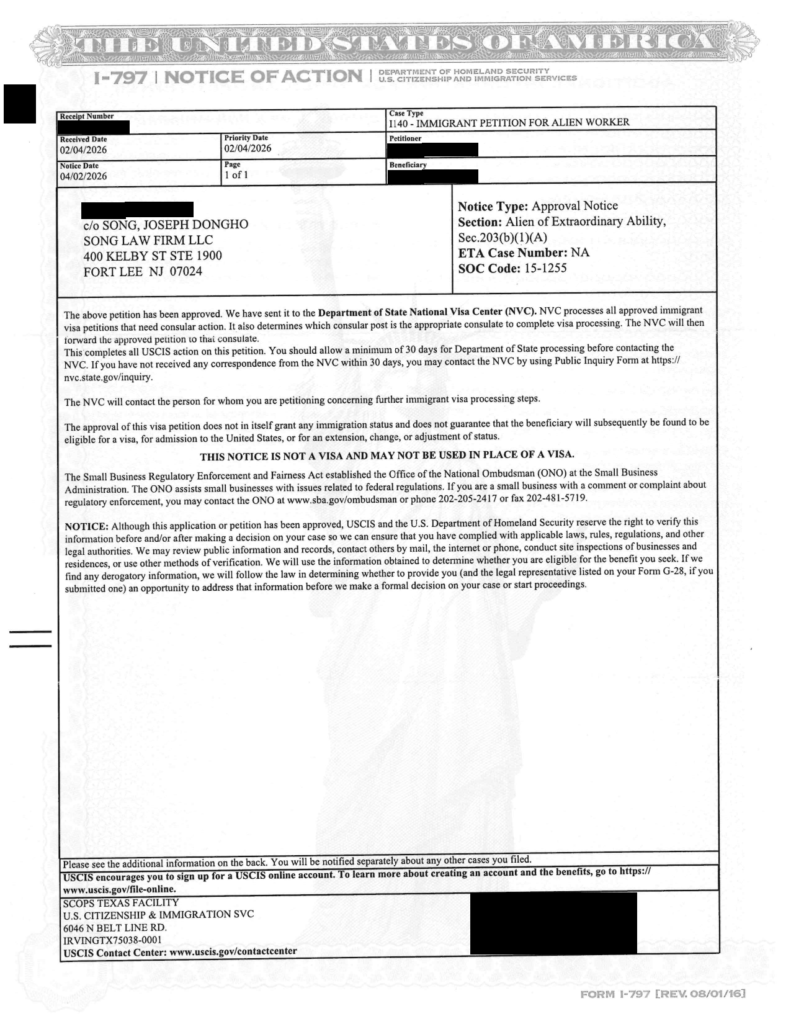
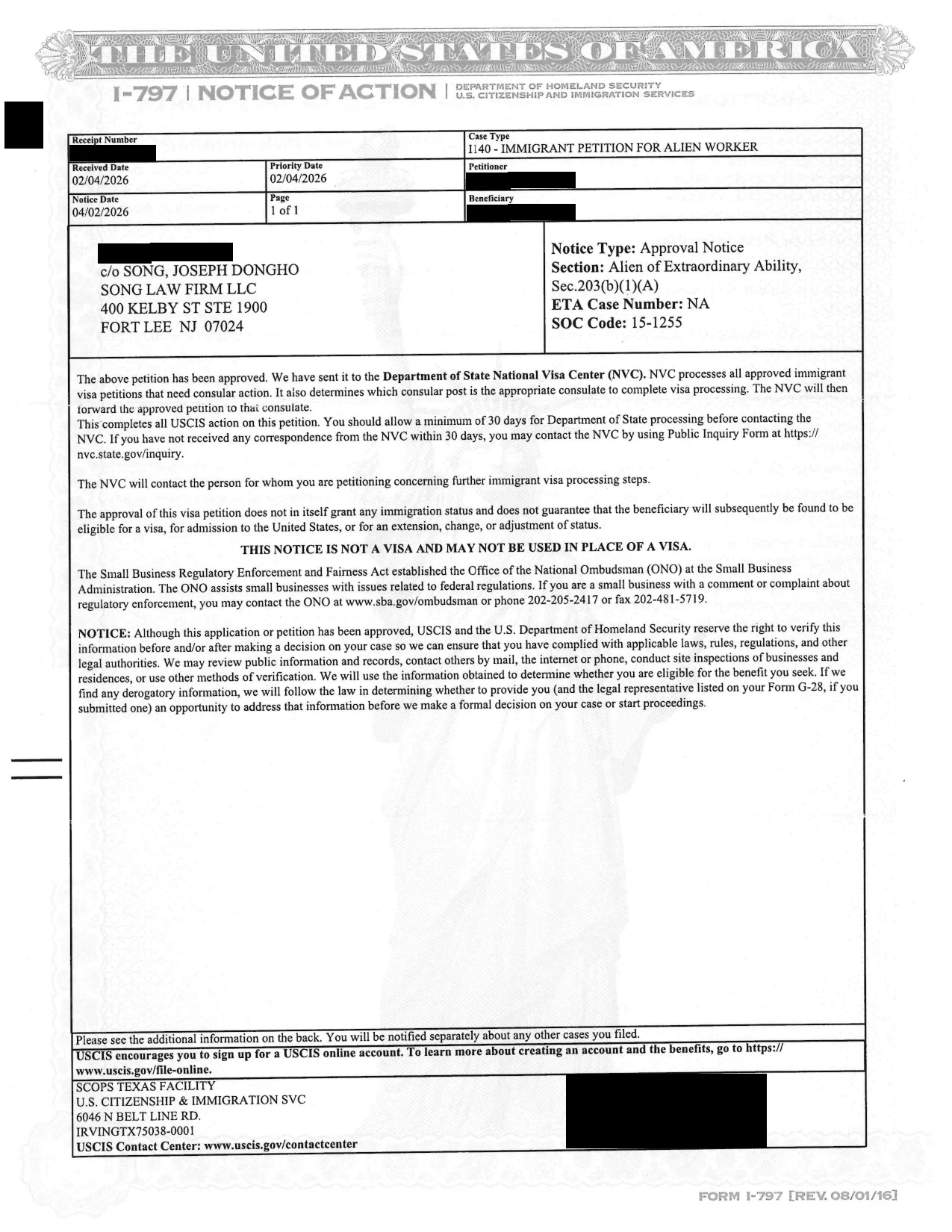
Design is a field where achievements are not standardized like research papers or patents, which makes it harder to show extraordinary ability objectively. The client worked with Song Law Firm over several months to organize the evidence and filed the I-140 in February 2026. Rather than adjusting status in the U.S., the client chose to obtain the green card through consular processing abroad.
Legal Issues
EB-1A is governed by INA 203(b)(1)(A) and 8 CFR 204.5(h). Without a major internationally recognized award, the petitioner must meet at least three of ten criteria and then pass the second step of the two-step analysis in Kazarian v. USCIS (9th Cir. 2010), the final merits determination. Meeting criteria is not enough; the full record must show the petitioner is among the small percentage at the top of the field, with sustained national or international acclaim.
Song Law Firm Strategy
- We organized evidence across multiple criteria, including awards, professional memberships, media coverage, judging the work of others, authorship, a critical role for distinguished organizations, and high remuneration.
- We tied design achievements to objective data such as product metrics, user scale, and industry adoption, rather than presenting them as attractive work alone.
- We refined recommendation letters from several industry experts over multiple drafts so each one addressed specific criteria and the final merits analysis.
- We presented a plan for future work in the U.S. to show the client will continue working in the field.
Process and Timeline
- February 2026: EB-1A self-petition (I-140) filed
- About two months later (April 2026): approved
- Afterward: forwarded to the Department of State National Visa Center (NVC) for consular processing
Result
In April 2026, USCIS approved the I-140 (classification: Alien of Extraordinary Ability, Sec. 203(b)(1)(A)). The approved petition was forwarded to the NVC, and the client is moving toward a consular interview and entry on an immigrant visa.
Lessons
- Fields with non-standard achievements, such as design, can succeed in EB-1A. The key is translating the work into objective metrics and third-party evaluation.
- Recommendation letters should contain specific facts and impact tied to each criterion, not generic praise.
- For clients living abroad or preferring to process overseas, planning the post-approval NVC consular route in advance makes the timeline easier to manage.
SONG LAW FIRM
Facing a similar immigration matter? Schedule a consultation today.
📞 201.461.0031 · ✉ mail@songlawfirm.com · 🌐 songlawfirm.com
📍 Parker Plaza, 400 Kelby Street, Suite 1900, Fort Lee, NJ 07024
