
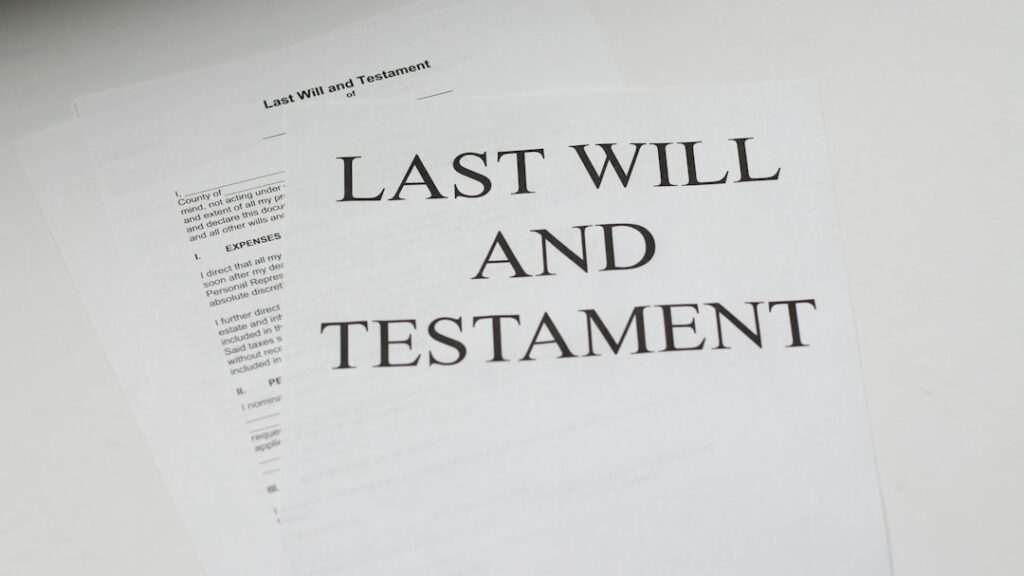
WILL & TRUST SUCCESS · SONG LAW FIRM CASE STUDY
Our client, one of several adult children of a New Jersey decedent, faced a scenario in which the family's revocable trust had been substantially amended in the last six months of the father's life. Under the original trust, all children were equal beneficiaries. Under the amended version, most of the estate — cash, brokerage accounts, and two properties — was redirected to one sibling and that sibling's spouse. Our client, effectively disinherited, had grounds to challenge the amendment based on undue influence and lack of testamentary capacity, and retained our firm to pursue that challenge.
Case Background
At the time of the amendment, the father was 82 and had recently received an early Alzheimer's diagnosis. His treating physician's notes repeatedly documented "impaired judgment" and "requires family assistance for decision-making." Despite this, the amendment was executed at a new attorney's office in the presence of only the favored sibling and that sibling's spouse. The long-standing family estate attorney had never been consulted. The value of assets redirected under the amendment was substantial, and the practical effect was to leave our client and other siblings with almost nothing.
Legal Issues
Two doctrines dominated the case. First, undue influence. Under New Jersey precedent, including In re Estate of Stockdale, a presumption of undue influence arises where (1) a confidential relationship existed between the decedent and the beneficiary of the challenged change, (2) suspicious circumstances surround the transaction, and (3) the beneficiary was involved in procuring or preparing the change. Second, lack of testamentary capacity. The proponent of the amendment must show that at the moment of execution the father understood the nature of the document, the extent of his assets, and the natural objects of his bounty. Contemporaneous cognitive testing and physician notes are decisive.
Song Law Firm's Strategy
We opened aggressive discovery. Subpoenas were served on (1) the new attorney's office for the full retainer file, drafts, email correspondence, and calendar entries; (2) the father's treating physicians for complete medical records; and (3) financial institutions holding the redirected assets for signature cards and transaction logs. The attorney file revealed that drafts were emailed first to the favored sibling, that the father had never once visited the office unaccompanied, and that a paralegal note flagged "client seems disoriented, sibling answered questions" during the intake meeting. In parallel, we retained a forensic geriatric psychiatrist to conduct a retrospective capacity evaluation, and we obtained the home health aide's daily log for the two weeks flanking execution, which documented multiple episodes of disorientation.
Procedural Path
We filed a verified complaint in the New Jersey Superior Court Chancery Division, General Equity. The opposition initially defended on the theory that the father had exercised free will and had simply chosen to reward the sibling who cared for him. Our documentary record — particularly one email from the favored sibling to the drafting attorney urging speed because "he'll do what we say" — undermined that theory. At a preliminary hearing, the court found the undue influence presumption satisfied and issued an interim injunction freezing further distribution of the assets. That order shifted the settlement dynamics dramatically.
Result
At court-ordered mediation, the opposition conceded on core provisions of the amended trust. Under the settlement, the amendment was set aside; assets were distributed under the original trust; and previously transferred properties were unwound with return of accumulated rental income. The trustee sibling was removed and replaced, and a separate settlement addressed fiduciary breach damages. The matter concluded approximately fourteen months after filing.
Key Takeaways
Three lessons emerge for families in similar positions. First, speed matters. Once an interim injunction issues, assets can be preserved; without one, they can vanish quickly through re-titling, gifting, or offshore transfer. Second, medical records are the spine of both undue-influence and capacity claims. Not the single diagnostic letter, but the pattern in progress notes and the specificity of caregiver logs. Third, the drafting attorney's file must always be pursued in discovery. Retainer letters, email drafts, and intake notes routinely surface the pivotal facts that close-in family members were careful never to put in writing themselves.
Frequently Asked Questions
Q1. Is there a time limit for challenging a trust amendment?
Yes. Under N.J.S.A. 3B:31-77, a challenge to trust validity is generally limited to two years, but as short as 120 days after written notice from the trustee. Consult counsel immediately.
Q2. Why is undue influence hard to prove?
Direct evidence is rare. Cases typically turn on circumstantial evidence — confidential relationship plus suspicious circumstances plus beneficiary involvement — that establishes a legal presumption which the proponent must then rebut.
Q3. Can the drafting attorney also be liable?
Sometimes. Where an attorney proceeded to execute a substantial change in the face of obvious cognitive concerns without an independent capacity assessment, a separate legal malpractice claim may lie, usually litigated in a parallel action.
Q4. What does fiduciary breach add to a will/trust contest?
It creates independent damages beyond restoration of the estate. New Jersey courts can order disgorgement of ill-gotten gains, removal of the trustee, and, in appropriate cases, punitive damages.
Q5. Mediation or trial?
It depends on the strength of the record and family dynamics. Where documentary evidence is strong and the opposition begins to hedge, mediation typically produces a better result, faster, than a full trial. Where the record is close, trial may be necessary.
SONG LAW FIRM
Facing a will or trust dispute? Schedule a consultation today.
📞 201.461.0031 · ✉ mail@songlawfirm.com · 🌐 songlawfirm.com
📍 Parker Plaza, 400 Kelby Street, Suite 1900, Fort Lee, NJ 07024
